Lesson 17: Color matching values

In this painting tutorial I go through how to set up a very basic palette, and how to use a palette knife to create value scales with various colors. By setting up these simple piles of color before you start a painting you can be assured that all of your colors stay within the desired range of values.

Color Matching Values

Matching colors to values (the darkness or lightness of a color) is the most important skill to learn when learning to oil paint. For further information on the topic of color values I would suggest checking out the lesson on Color Theory Basics.

In the painting tutorial video above I go into how to mix different values of color on a palette. I have chosen to use a painting knife however the same colors could be mixed using a brush. The palette is glass which has been spray painted grey on the back. I have chosen to paint it grey because this is a very neutral color, and I don't want the color of the palette to interfere with how I see the colors I'm trying to mix. It is important to remember that colors will interact with each other. For instance a white square painted on a yellow background will appear to be darker, since the surrounding color is also light. However, a white square painted on a blue background will appear to be brighter since the background is darker.

color-matching-1024x512.jpg

Once you've got a palette with a neutral background you can begin to start making different value scales in different colors. You should already know about value scales as we have covered them extensively in the drawing section of this website. To make a value scale you must first have a guide to go from. So I would suggest making your first value scale in black, white, and greys. Then you can compare the darkness or lightness of your subsequent mixes of color against a black and white scale (this can be achieved by squinting).

If you came here thinking about trying to find what colors match (ie. which colors go together) I'm sorry to tell you that this isn't something which can be summed up in a succinct manner. There are many factors which determine what colors will traditionally "match". If you peruse my section here on Color Theory you can begin to examine all of the reasons why there isn't any general consensus of what colors actually match, and which ones clash.

For this assignment you will have to create your own value scales in 6 colors and Black and White. Red, Yellow, Blue, Orange, Green, Violet. So there's a total of 7 value scales which you will be creating. Once your palette is full of these colors you will then take a picture of it and post it to your student blogs.

Lesson 18: Local Color

Local Color

Painters often refer to something known as Local Color. So what is it exactly? Well, there is a very simple explanation. Local Color refers to the color of an object if it is unhindered by shadows and highlights. Still don't get it? Basically it is what the actual color of an object is. Take for instance a Tomato, now most people would agree that tomatoes are red, however that's just part of the story and the way that our eye perceives colors. In reality if we really examine a tomato we will see all sorts of different tones and highlights. Take a look at the image below and you will notice the myriad of colors which are created just by one tomato. There's pinks, violets, browns, and reds. Simply put, when painting any object we must consider all the colors and many times it isn't intuitive to see the light violet colors because of our preconceived ideas about the local color of the object, which is red.

local-color.jpg


When it comes to painting it is very important to be aware of what the local color of the object is, however it is also vital that we delve further into the more nuanced colors that appear as well. This is even more important when we have multiple objects of different colors placed closely together. The light bouncing off of one surface can create a reflection and influence the surrounding areas. Therefore, if we look at the top of the tomato we can begin to see that the green vine above it is effecting the colors of the shadows as well. For this reason it is very common for painting instructors to say that students need to start examining what colors make up the shadows in the objects they paint. There's a whole rainbow of color hiding in the shadows. This was most evident in the Impressionists' works as they would commonly use blues, and even reds in their shadows.

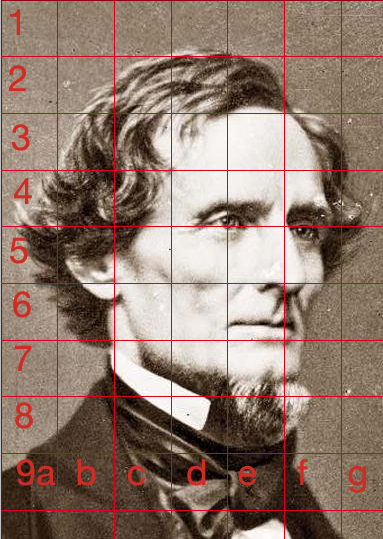
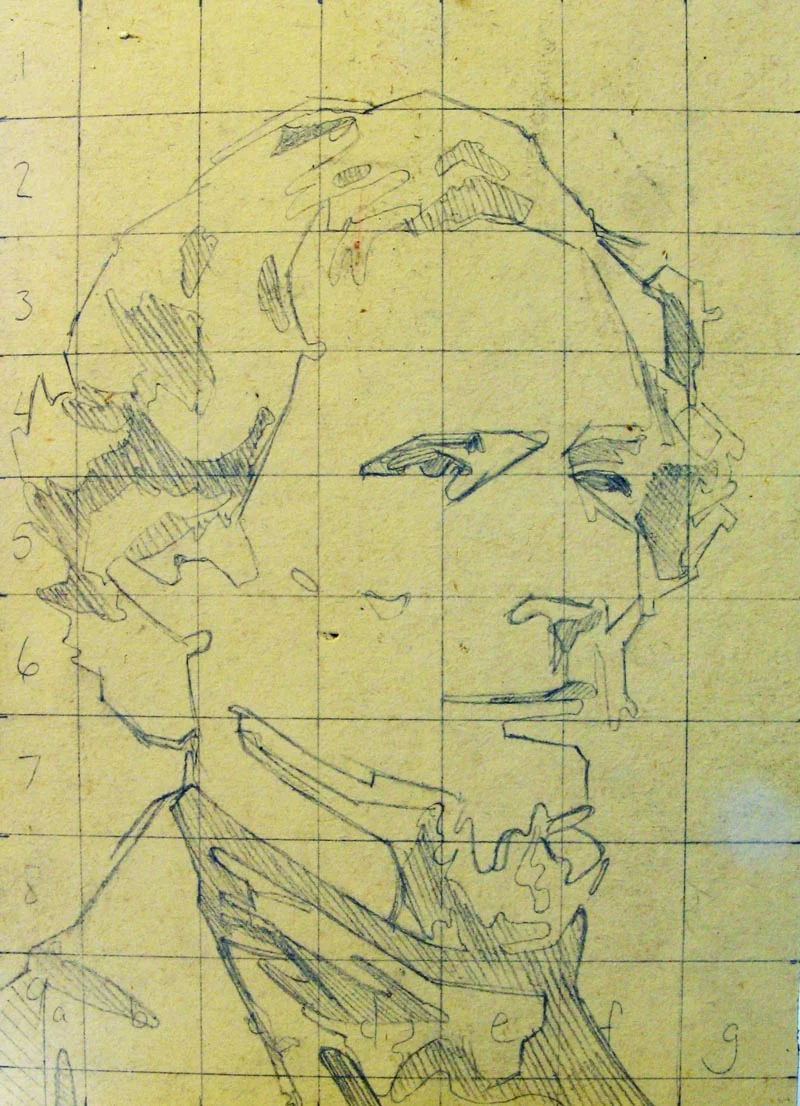
It is the goal of this lesson to get beyond local color and we are going to make sure that there's no chance it will seep into this exercise. You will be painting a portrait without the use of local color. It is up to you to use your skills in seeing the value (darkness) of a color and by doing so you can still create a believable space which is totally divorced from your preconceived notions about what the local color of the object is. For the first part of the assignment you will copy the painting below and this will give you a feel for how Color as Value works. I've included the drawing, as well as the original image (gridded out), and a picture of my palette so you can get a clear look at what these colors look like. Once you are finished with the first painting you will find an image of your choosing and will have to complete a second painting. In your second painting you will once again be looking beyond local color. Really push how intense you can make your colors, and you'll also start to notice that the temperature (basically how warm or cool a color looks) also influences the way we perceive reality.

1. Source Image from which the painting will be made. Feel free to change the unit of measurement if you wish. One box could easily equal an inch or whatever fits the size of the canvas you are working on.

portrait-grid.png


portrait-drawing-2.jpg

2. After gridding out your painting surface you will sketch in the big value shapes present in the photo.

portrait-2.jpg

3. You will then paint in the value shapes using the value of the color to create an illusion of depth. Disregard what you know about color intensity and local color. Be bold.

palette.jpg

4. Remember that your palette should be a representation of all the colors you will use.

portrait-black-white.jpg

5. If possible take a photo of your painting and change it to black and white. This will be an indicator of how good your eye is. The painting should stand up as a black and white image as well as a color one. This is an extremely important aspect of painting. Seeing color as value.


Upon finishing this copy you will be creating another painting on your own in the same manner. Remember to choose an image that has a wide range of values from light to dark.

Lesson 19: Your first resolved painting from start to finish!


Oil Painting Step by Step

In this painting tutorial I go through a common step by step procedure on how to paint with oils. From the drawing, to the underpainting, glazing, and final details.

Step 1: Find your source imagery and prepare it for painting. This could include photoshopping various elements in photoshop, collaging images from magazines, taking your own photos to paint from, etc.Then create a grid on your source imagery. This can be done in photoshop, or you can print the photo out and grid it out with a ruler and pen.

Step 2: Create a grid on your canvas which matches the size of your prepared imagery (ratios are ok, so for instance an image which is 5 x 10 could be scaled to a canvas which is 20 x 40 etc.) Mark each line on the grid with a series of numbers and letters so it is easy to find which square you are looking at and how it relates to the image you are painting from.

Step 3: Draw your imagery onto the canvas using a pencil using your grid lines as a guide to help you. If you are wondering why we use a grid, the answer is that it is much easier to manage smaller squares as opposed to larger ones. It also forces you to abide by the predetermined composition you initially created, so basically, it helps you make sure you can fit everything you want to on the canvas.

Step 4: Find large value shapes. Value refers to the lightness or darkness of a color. For this step it is helpful to have a black and white version of the source material from which you are painting. If you have photoshop just take out all of the saturation of the color, if you don't, then make a black and white photocopy of the image.

Step 5: Paint the large value shapes with the values they correspond to in black and white.(You can use Acrylic paint for this as it dries faster).

Step 6: Once you've completed your value study of the painting you are ready for color. Mix the colors you wish to apply to the canvas on your palette (Never mix on your canvas). You can use either opaque colors which will totally cover the value study, or you can use transparent colors and use the value study to help make your shadows.

Step 7: Paint in the colors you wish to use, and use the value study to see how closely the value of the color relates to the value of the value study. If this is hard for you to see, then just squint you eyes until the color turns into a black or white shade.

Step 8: Make final adjustments and put in details.


Lesson 20: Gestalt principles of art and design

Gestalt Principles of Art and Design

These theories of painting come from a German form of psychology called Gestalt which simply states that the whole is greater than the sum of its parts. It is often used in both art as well as design to achieve the desired effect. The main points of Gestalt are summarized below the image.

1. Figure/Ground

This is the idea that speaks to the human mind's tendency to separate figures from their backgrounds. These differences can be furthered by utilizing a number of different techniques which can include contrast, color, intensity, and size.

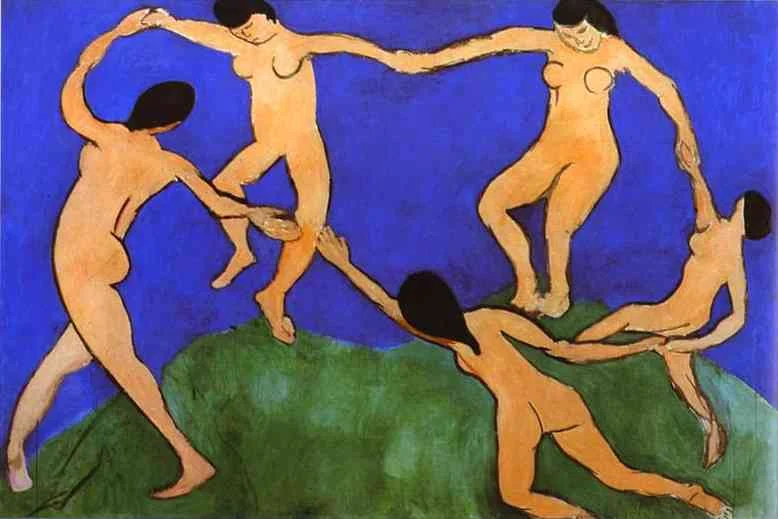
In the Matisse painting below we can see a clear differentiation between figure and ground. It is also helpful to think of the ground as the negative space around the figures present. Also notice how Matisse utilized contrast, as well as color to make the figures come to the front of the painting, and push the background back in space. In general it is a good rule of thumb to think that warm colors will come forward in space while cool colors recede.

matisse.jpg


In contrast to how Matisse used Gestalt principles to make his figures stand out in space we can look at the French artist Vuillard who played around with blending the background and the figures present in the image below. Notice how the woman who is closest to us seems to almost dissapear into the background while the man at the door has a sharp contrast against the pattern. Vuillard was playing with the principles of Gestalt here to highlight how our eyes generally view paintings. By making the man at the door seem to pop to the front this creates a tension in the painting that some find desirable.

vuillard.jpg


2. Similarity

This is the Gestalt theory that states that the viewer tends to group together objects which share the same characteristics such as shape, size, color, texture, and value. In the Degas painting below we can see how he employed many different circle shapes (in the form of the hats) in order to create a sense of unity throughout the painting. The hats also have similar textures which help us group them together. Notice how powerful color intensity is and how the hats which are brighter are easily grouped together while the other hats which are darker are a different group altogether.

degas.jpg


The principle of similarity can be more easily understood in the following graphic below. Notice how even though all of the shapes are the same color that by changing the shape of the objects we also change how our minds group them together.

similarity-design.gif


3. Proximity

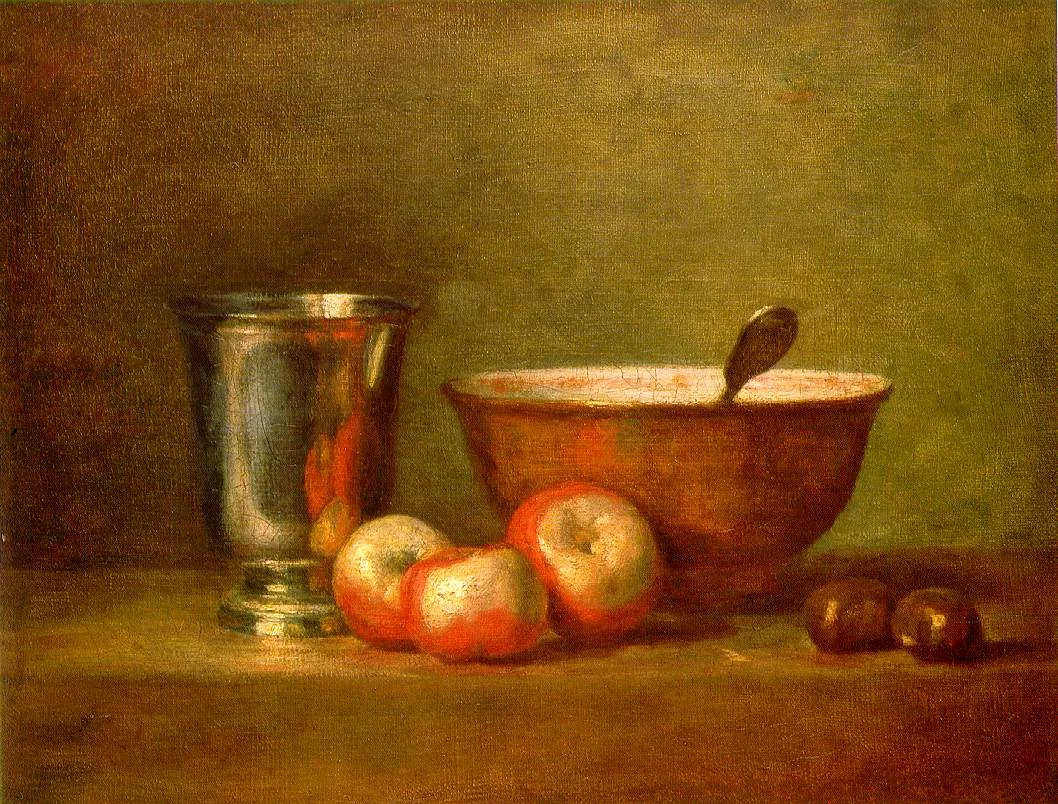
Think of proximity as how close certain elements are in a composition. Proximity can also be referred to as grouping which is similar to similarity. However, there is a difference between similarity and proximity as we can see that the objects don't need to all be the same size in order to be grouped by the brain. In the Chardin painting below we can see how the apples are grouped together even though they are different sizes. Grouping can be achieved by shape, color, tone, and space.

chardin.jpg


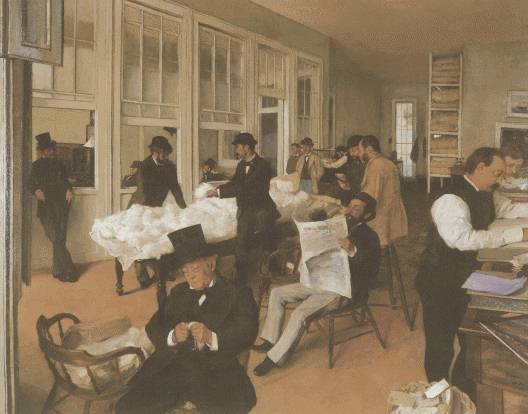
In the painting below by Degas we can see how parts of a composition can be grouped together by their value. Even though there are figures both in the foreground as well as the background we can see how we group together the darker elements as abstract shapes. In the case of Degas' painting of The Office this is present in the dark shapes which make up the suit jackets of the subjects present .

degas.office.jpg
closure.gif

4. Closure

As we discussed earlier closure is the idea that the brain will fill in any extraneous information which is not present in the image. This is a common tactic employed by both painters as well as designers.In the image below we can see how a square is created by the negative space.

Carthage-tiepolo.jpg

5. Continuity

Continuity is the idea that the eye will continue to look in a direction in which it is pushed by the forms and shapes present. In the painting below by Tiepolo we can see how our eyes are first drawn to the main subject present which is the man riding a horse holding a large weapon. The weapon is pointing down at a figure which lie dead on the ground. By utilizing the Gestalt principle of continuity Tiepolo pushes the eyes of the viewer to move around the canvas.

RaphaelSchoolofAthens1.jpg

6. Symmetry and Order

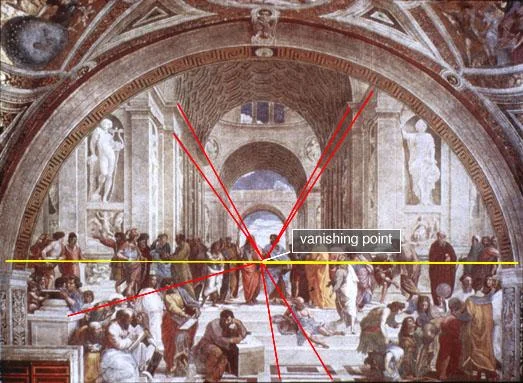
Symmetry and Order refers to the idea of how balance, and symmetry give the composition an overall feeling of solidity and structure. In Raphael's painting below we can see how by having a clear sense of symmetry adds to the structure of the entire composition. Notice how the figures aren't perfectly symmetrical on both sides of the work, however they are still balanced and neither side seems too "heavy".The larger idea at play here is that viewers want to "read" a painting in a systematic and organized manner. Some viewers who find a painting which is too difficult to read may spend less time trying to comprehend it. While clearly balanced compositions will be more accesible. This is not to say that every composition needs to be perfectly balanced and symmetrical, there are many examples of artists who play with the idea of symmetry and balance and still are quite sucessful. Remember that these principles are not set in stone, and it is ok to break them. The point being that the better you understand these principles the more sucessful you can be at breaking them.


Art History: Painting flowers

Being interested in painting means that you can’t just be interested in technique, you have to know where you fit into the world, or if you don’t know where you fit into the world then you should know about who came before you. Now, you may be thinking that you don’t have some sort of lofty ambition to become the next greatest artist, you just want to paint some flowers, and that’s ok, however even the decision to paint flowers on a table has a long, and vibrant history. And to deny yourself the history of flower painting also denies you of one of the greatest resources that you have. I’ll get more into this concept later.

Often times people are scared, offended, or angry with contemporary art. This stems from a feeling that the artist is trying to be smarter than the viewer. A sort of dictatorial power where viewers must look at the creations that artists make. This is generally made into a straw man argument, complete with references to some obscure performance art piece which seems highly inaccessible. Since we are focused on painting lets take a look at some paintings which are considered to be “hot” right now, and fetch extremely high price tags.

The work of Lucien Smith takes from artists who died nearly half a century previous. Obviously there is a connection to Jackson Pollock, because of the dripping. But if we really look at pollock’s dense canvases we can see that they are much more vibrant and full of life than Smith’s work. As we delve further into Smith’s work we see that these abstract paintings are just one of many different ways that he paints, and that he changes styles frequently from painting to painting. He isn’t bound by one particular genre and isn’t confined to one particular description.

Now, you may be thinking “I don’t like it” and that’s ok, I don’t particularly like his works either, but whether you like something or not is irrelevant. It still exists, and it still can be used as an example of where the contemporary is at the moment. With this in mind, it is nearly impossible to say if a work of art is “good”, or not. With that in mind, you may be surprised to know that Lucien’s works are not well received everywhere in the art world, one of the most influential critics living today “Jerry Saltz” said that work similar to his was “crapstraction” a play on the word abstraction, and that “This is not painting but semantic painterbation”. So as you can see, the art world isn’t some giant monolith that everyone makes it out to be. There is a wide variety of viewpoints and no clear consensus as to what art should or shouldn’t be.

Many times an agument is put forward by someone without a lot of historical knowledge that there are rich buyers, and snobby critics who just randomly choose some MFA student to make famous and then they all agree, and everyone makes money. One of the world’s most famous painters living today is Eric Fischl, who was known for his perverse paintings of American suburbia has devoted a whole slew of his new paintings to the theme of art fairs, where this stereotype certainly rings true in his paintings. And his paintings are not being shunned by the art world, instead the opposite is true. This is because most have an ability to be self critical, a skill which is mandatory if you want to become an artist.

So whats this have to do with the flower paintings. In the 1600s in the Netherlands what we now think of as still life paintings really flourished. These painters depicted everyday scenes with amazing detail and were true masters of oil paint as a medium. Artists such as Roelandt Savery and Jacob Vosmaer made a great living off of their works and lived very opulent lifestyles. The idea that historically speaking, you have to be dead to make a lot of money from your artwork simply isn’t true. As we dig deeper into one work we can see that in this painting, titled ( I could you not) Still Life there are over 40 different flowers from many different countries. To be able to paint from all these different flowers in real life meant that you had to have access to money, and it was no mistake that Roelant became the court painting for King Rudolph in Prague. Yeah, kings actually used to have painters because their works were seen as status symbols. So what else does this painting of flowers tell us about Prague in the 1600s? It tells us that Rudolph had access to flowers, which means established trade routes. It also tells us that his kingdom, (or certainly himself) wasn’t do too poorly as he could afford to spend money on things like paintings, and importing flowers from all over Europe. And as we look more into Rudolph as a character, we start to learn more about Roelant as a painter. Rudolph was a really strange emperor, interested in magic, alchemy, and astronomy. He loved collecting things, beautiful things. Could this be why Roelant moved from The Netherlands to Prague to paint flowers? Well, yes, yes it was.

Wait….Do you see what just happened? We just went from flower painting, to European empires, alchemy, and issues of wealth and class by looking at a painting. See why art and paintings are important cultural relics? And some would argue that flower paintings aren’t relevant today because they don’t address contemporary issues. Is that true? Should nobody ever paint flowers again because somebody else did it better? Well of course not, and there’s a way to ensure that doesn’t happen.

You see, first of all you need to discover what types of flower paintings you’re attracted to, and why. By default, you will most likely go to technique first, this is understandable because you still need to build a skill set. Perhaps you’re more interested in how flowers are depicted in Persian cultures. Perhaps you admire the precision of photo realists, but again, this is just technique. As one of my favorite paintings instructors Steven Sheehan said “If you’re painting a landscape put a car in it, because then at least people will know when it was painted” . So if you’re making a painting of a flower on a table – how are you doing it. What is your process? Are you starting with a photo you got off the internet of some flowers, how does this effect the final image? Are you going to your local grocery store to buy some flowers? Do you leave them in the plastic bag with the supermarket’s logo on it or do you take them out and put them in a vase? If so, what kind of vase? A hundred year old vase that your grandmother had, or a McDonald’s cup. How are you lighting them? Will you be using classical form lighting? Will the painting be done in chiaroscuro, with high contrast such as in carvaggios works, or will they be bland pastel colors like Morandi?

All great works of art can generally be defined by a certain set of criteria.

What materials and techniques are the artist using?
By identifying the materials and techniques that another artist used you can develop a work schedule which allows you to get better at your abilities. This is the nuts and bolts of the work, not the core.

What other artists are known for using this technique?

Do some research, and look into what other artists are good at the techniques you want to get better at. Make a list of them, make a blog about all of them, copy their works, and soak in their paintings. Study them, and understand what it is about their work that you consider to be strong.

What is the historical context of the work?

This one tends to freak out students quite a bit, and it’s understandable as to why. The history of painting is big and imposing enough, not to mention all of art history, and then all of humankind, and then all of the history of time and space and ahhhhhhhhhhhhhh!

Stop. You’re freaking out again. As we discussed before painting doesn’t have to be about some lofty philosophical ambition, it can just be about flowers on a table. However, you must be aware of the decisions you’re making when you place that vase, and those flowers from your front yard in North Dakota, on a new table from ikea, light by a halogen bulb pointed at the ceiling. You can’t escape it. A time and place is infused into every great work of art. Don’t diminish your story in exchange for a cheap technique which can be copied. You’re more interesting than that.

Lesson 21: Color Harmonies


Introduction to Color Theory

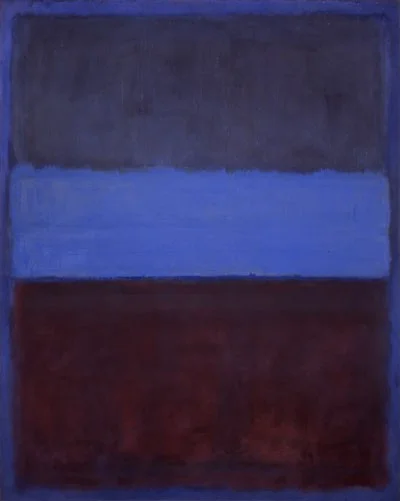
Before we get into exactly what color theory is, and how it works, we need to first look at a broader concern as it pertains to how people experience works of art. This is the correct place to begin an Introduction to Color Theory as we will have plenty of time to delve into all of the principles and physical properties of color later. So, what exactly happens when we look at a piece of art and experience it with our senses? This experience can be called an Aesthetic Experience. Aesthetics (also spelled æsthetics or esthetics) is a branch of philosophy dealing with the nature of beauty, art, and taste, and with the creation and appreciation of beauty. It is more scientifically defined as the study of sensory or sensori-emotional values, sometimes called judgments of sentiment and taste. More broadly, scholars in the field define aesthetics as "critical reflection on art, culture and nature."
rothko_blue.jpg

So what does this mean exactly as it relates to an Aesthetic Experience, and what does this have to do with painting? Well, believe it or not, you most likely encounter and experience many Aesthetic Experiences every day. These could range from looking at a flower and admiring its beauty, to sitting on the couch and watching a commercial. Both of these actions are sensory ones. Since you are a passive observer who is experiencing the world through sensation, and perception. As with any Philosophy there has been much disagreement throughout the years as to what exactly is happening in our brains when we have an Aesthetic Experience.

Kant said that aesthetic experience of beauty is a judgment of a subjective but similar human truth, since all people should agree that “this rose is beautiful” if it in fact is.

Shopenhauer believed that aesthetic contemplation of beauty is the most free that the pure intellect can be from the dictates of will; here we contemplate perfection of form without any kind of worldly agenda, and thus any intrusion of utility or politics would ruin the point of the beauty. It is thus for Schopenhauer one way to fight the suffering.

Oscar Wilde stated that the contemplation of beauty for beauty's sake was not only the foundation for much of his literary career but was quoted as saying "Aestheticism is a search after the signs of the beautiful. It is the science of the beautiful through which men seek the correlation of the arts. It is, to speak more exactly, the search after the secret of life."

So before we get into the nuts and bolts of what makes color theory work it is important to first understand that Aesthetics do exist, and the merits and qualities of what makes up an Aesthetic Experience have been debated for quite some time.

A common question regarding Aesthetics is whether or not they are universal, cultural, or personal. For instance someone may have a different reaction to looking at a painting of a rose who has a strong personal memory of the flower. Perhaps seeing roses reminds them of their childhood and cutting them in the garden with their grandmother. In this case it is important to note that Aesthetics aren't necessarily a rigid set of rules by which one must abide. Rather that our Aesthetic Experiences are also guided by cultural as well as personal experiences. They are more fluid rather than concrete. With this being said it is also important to understand that there are a certain set of rules which have been successful throughout the years in creating a desired response from the viewer. To put it simply, how do we as humans create works of art that elicit certain internal responses in those who view our artwork? And this is where we come to color theory.

As many students on this site have probably already noticed I make a lot of correlations to music as this is an easy comparison I've found that many people can grasp. In the case of color theory it is no different. Simply put color theory investigates what elements work in creating a desired effect, much of which is the same as music (listening to music is also an aesthetic experience as it is an experience where someone is experiencing something with their senses that is beyond words).

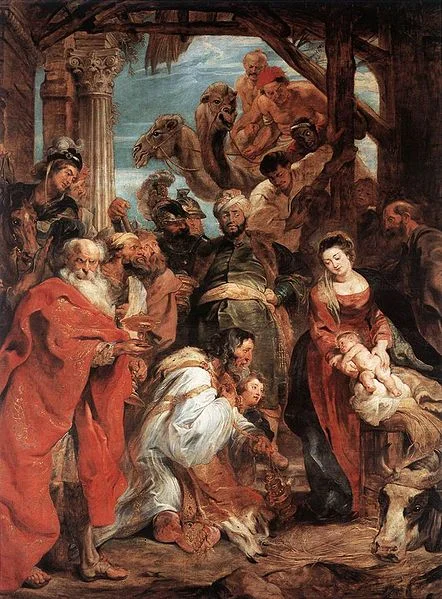
First take a listen to Mozart's Requiem while looking at Rubens' Adoration of the Magi.

The_Adoration_of_the_Magi.jpg

Notice how all the notes create harmonies that our ears latch on to? See how the tempo and intensity of the music changes throughout the piece to evoke a certain feeling inside of us? Pay attention to the lack of dissonance, and what type of emotions are stirred up while listening to this piece. Mozart's Requiem is regarded as a masterpiece not only because of how it makes us feel, but also because of how Mozart interpreted music and utilized his own creative vision to use the tools of music (which had been around hundreds of years before him) to craft something new which struck a nerve with the listener. In painting, one of our tools is color, and how we place our colors on a canvas could be compared to how Mozart arrange his notes on paper.

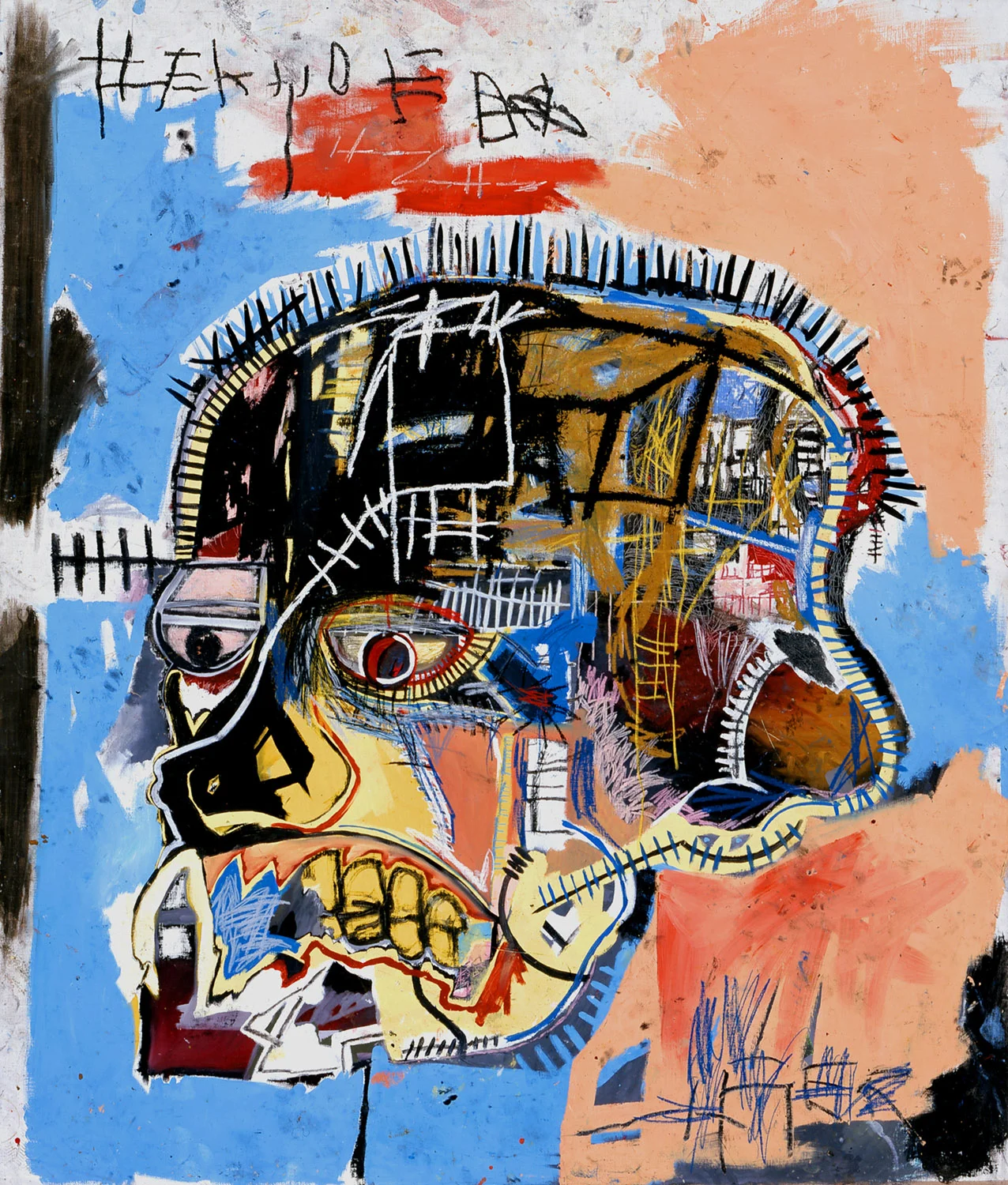
basquiat-jean-michel.jpg

Now lets listen to another composer who used these same tools of music to create a feeling of dissonance and anxiety. His name was Alfred Schnittke. Take a look at the painting by Jean Michel Basquiat below while listening to Schnittke's piece and examine what type of emotions begin to well up inside of you.

Now, Schnittke used dissonance, a feeling of chaos, and strange time signatures in his work. Does that makes the work more difficult to listen to? If so, does this make the work bad? Or is there really such a thing as bad music? And the most important question, could Schnittke have created these compositions without a firm understanding of the rules of music and how to take them apart? Sure, Schnitkke's pieces aren't for everybody, just as paintings by Jean Michel Basquiat aren't for everyone. But what we're really examining here is just how the use of the mechanics of sound and color are used in order to make us feel a certain way. As we look at the piece by Basquiat we may experience a similar feeling, but here we are experiencing things visually.

Hopefully you have gained an insight into just what Aesthetics as well as Color Theory are, and how to identify the different ways different artists can use the conventions of sight and sound to ellicit certain feelings, and sensations in those who view them. As we continue on we will be looking at just what are the mechanics of color, and how to use what painters and scientists have studied for hundreds of years and apply them to our own works. It is important to remember however when embarking on this journey that these rules alone will not make "good" paintings. They are just tools, which when combined with finding your own personal inspiration can be manipulated to be used for your own desires in how you want to depict an object with paint, and more importantly, what Aesthetic Experience you wish to invoke in someone else.

<iframe width="420" height="315" src="http://www.youtube.com/embed/AlBS0v20T7o" frameborder="0" allowfullscreen></iframe>

Lesson 22: Color Emotions

Color Emotions.

Before we get into what different emotions can be transmitted to a viewer/participant who is experiencing different colors, it is first important to understand that there is an entire field devoted to studying how color effects our emotions. By studying color psychology we can begin to understand the complex and mysterious world of Color Emotions.

Color Psychology is a relatively new branch of Psychology which deals with how color relates to human behavior and emotions. In the advertising world this is well known, and debated. Why are the golden arches of McDonalds yellow-orange? Why are prescription pills brightly colored? Why do we paint rooms green to calm people?


green-room.jpg


According to color psychologists these colors elicit certain responses in individuals that can effect their behavior as well as their mood. As a painter working with color one could use the common reactions to certain colors to one's benefit, and employ similar methods to evoke similar moods in the viewers of our work. Blue tends to have a very calming effect, and in Glasgow blue lights were installed in traditionally violent neighborhoods, which then saw a reduction in the amount of assaults occurring in the area. In Japan blue lights were installed at metro stations where a lot of people had committed suicide. When it comes to red (a color associated with passion) we see the red light districts who are trying to create an atmosphere of sex and intensity. And nowhere is the effects of color psychology at play more than at theater and music performances where light operators dim and change colors to fit the mood of the play or song being performed.

stage-lights-color.jpg

It is apparent that the stage which was set up above was most likely prepared for a band that plays soothing and relaxing music. This doesn't take special equipment to measure the physical attributes of color and how it effects us. For whatever reasons we as humans regard blues, dark reds, and violets as soothing or relaxing colors.

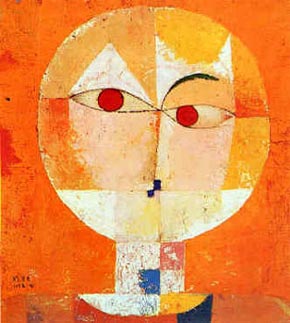
At this point you should have a basic understanding of what color psychology is and most likely you also understand what colors are commonly used to evoke certain feelings, behaviors, and moods. The same is true with painting. Let's take a look at a few famous paintings by Paul Klee and see how he used color in different ways to generate different ideas.

paul-klee.jpg

In this painting Klee used childlike colors to further accentuate his ideas about his subject matter. It makes one think of the circus, cotton candy, or a box of crayons. The primitive drawing style furthers Klee's concept which often was inspired by children's art.

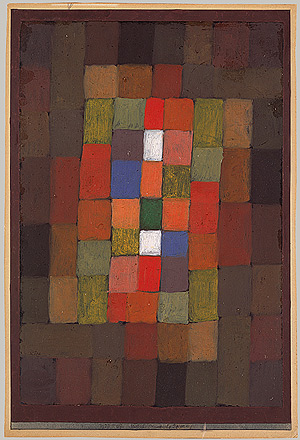
paul-klee-color.jpg

In this painting (also by Klee) we see simple blocks of color which are painted very loosely and minimalistically. But lets think about what the overall effect of using the colors that Klee chose to use. The deep browns and violets evoke a more serious tone to the work and produce a feeling of relaxation and contemplation. Very different than the colors Klee chose to use in his childlike portrait. A lot of this may seem like a no brainer. You may be thinking "of course Blue is calming, and red is enegetic! Why bother blathering on about it forever?" Well, the reason why it is important to discuss the pasychology of color is because often beginning painters will get caught up in just trying to represent a scene, or image, without taking into consideration the overall impact certain color decisions will have on the piece as a whole. A shadow can be blue, red, or green. So what you need to ask yourself is what shadow color will best help depict the subject matter, as well as the mood you are trying to create.

As stated previously there is not a set list of how everyone will respond to color. While personal experience and memory can be closely tied to certain colors; overall there is some agreement as to what emotions can be triggered by using certain colors. Below I have made a list of some of the most common associations that my past students have made with certain colors. While it is by no means an authoratative list on the topic, it is nonetheless obvious that many people make the same associations with certain colors.

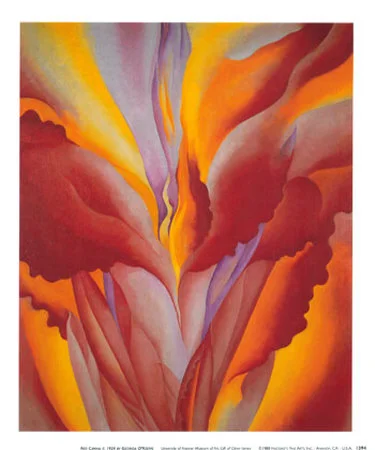
Red-Okeefe.jpg

Red

Energy, Vitality, Hot, Machismo, Sex, Anger, Rage, Attention,

van-gogh-sunflowers.jpg

Yellow

Warmth (sun), Cheery, Happy, Loud, Fun, Sickness,

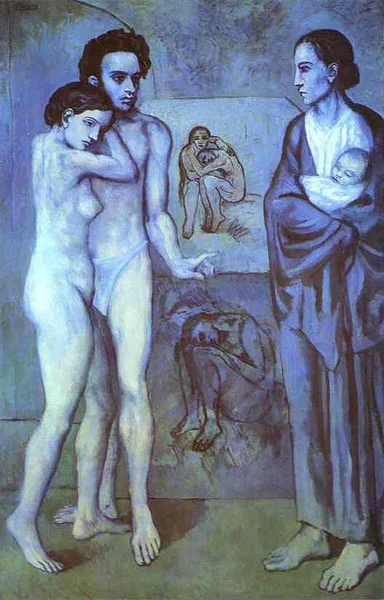
picasso-blue.jpg

Blue

Calming,Contemplation, Trustworthiness, Relaxing, Freezing, Sadness,

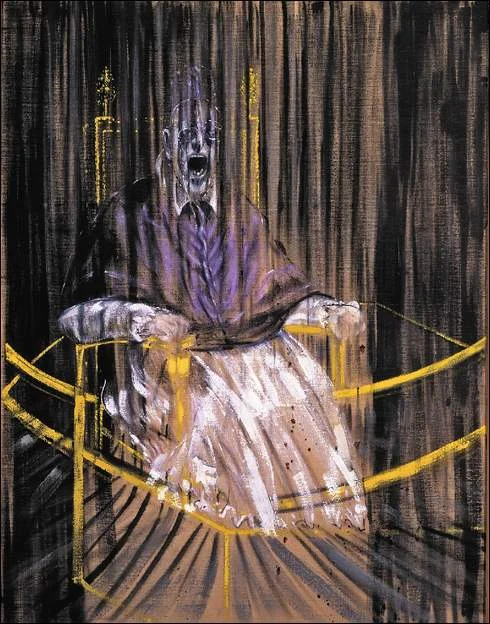
francis-bacon-pope.jpg


Violet

Ritualistic, Religious, Plush, Luxurious, Insanity, Strange,

richter-green-landscape.jpg


Green

Life, Energy, Relaxation, Soothing, Natural, Boring, Depression,

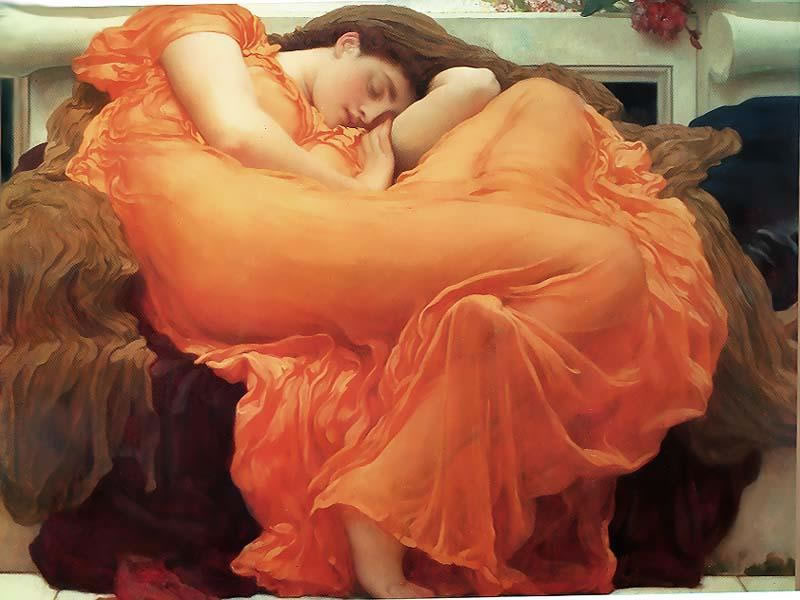
Flaming-June-Lord-Leighton.jpg


Orange

Warmth, Cozy, Fun, Young, Natural,

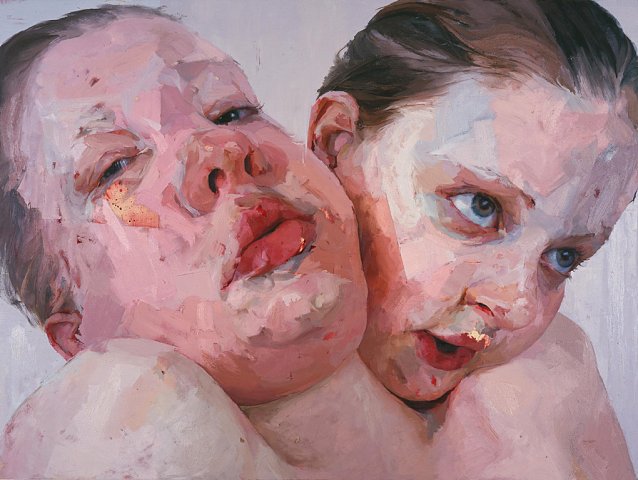
jenny-saville-hyphen.jpg


Pink

Beauty, Femininity, Love, Sex, Playful, Weak,

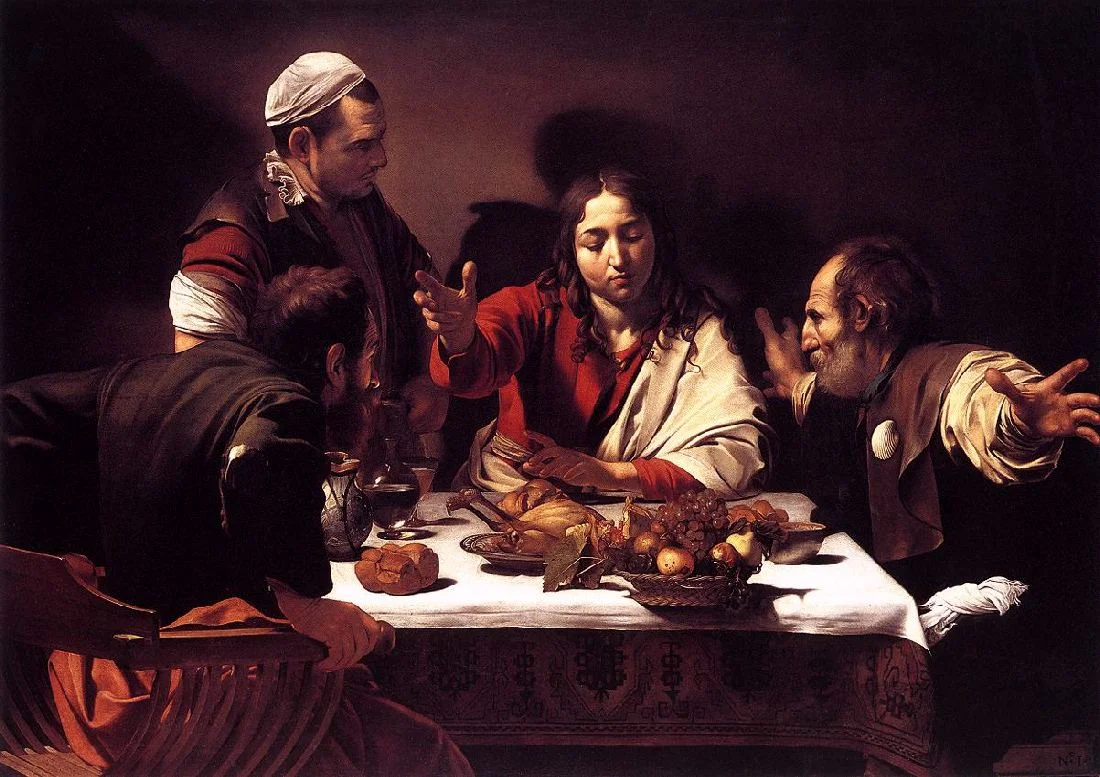
Caravaggio-The-Supper-at-Emmaus-Brown.jpg


Brown

Natural, Secure, Dirty, Comfort, Raw, Thoughtful,


agnes-martin-white.jpg

White

Purity, Clean, Holy, Simple, Cold, Elite,

motherwell-black.jpg

Black

Seriousness, Death, Depression, Anxiety, Fear, The Unknown, Intellectual, Modern,

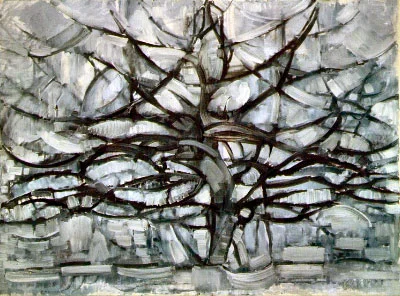
Mondrian-grey-tree.jpg


Grey

Boring, Dull, Depression, Apathetic, Cold, Lifeless, Neutral, Listless,

Assignment:

Make two paintings describing two different moods which you want to evoke. Use Klee's square painting as a guide as to how to layout the work. Use only squares of color (which should fill up a small canvas) and try to paint a mood, or atmosphere. If you wish you can choose a mood from the list below.

Accepted

Accomplished

Aggravated

Alone

Amused

Angry

Annoyed

Anxious

Apathetic

Ashamed

Awake

Bewildered

Bitchy

Bittersweet

Blah

Blank

Blissful

Bored

Bouncy

Calm

Cheerful

Chipper

Cold

Complacent

Confused

Content

Cranky

Crappy

Crazy

Crushed

Curious

Cynical

Dark

Depressed

Determined

Devious

Dirty

Disappointed

Discontent

Ditzy

Dorky

Drained

Drunk

Ecstatic

Energetic

Enraged

Enthralled

Envious

Exanimate

Excited

Exhausted

Flirty

Frustrated

Full

Geeky

Giddy

Giggly

Gloomy

Good

Grateful

Groggy

Grumpy

Guilty

Happy

High

Hopeful

Hot

Hungry

Hyper

Impressed

Indescribable

Indifferent

Infuriated

Irate

Irritated

Jealous

Jubilant

Lazy

Lethargic

Listless

Lonely

Loved

Mad

Melancholy

Mellow

Mischievous

Moody

Morose

Naughty

Nerdy

Not Specified

Numb

Okay

Optimistic

Peaceful

Pessimistic

Pissed off

Pleased

Predatory

Quixotic

Recumbent

Refreshed

Rejected

Rejuvenated

Relaxed

Relieved

Restless

Rushed

Sad

Satisfied

Shocked

Sick

Silly

Sleepy

Smart

Stressed

Surprised

Sympathetic

Thankful

Tired

Touched

Uncomfortable

Weird

Lesson 23: Advanced color mixing with a limited palette

What is the correct color wheel for painting? It has been hotly debated for over a century, and everyone seems to have an opinion about what the "real" primary colors are. In the following post I hope to educate you about some of the theories about just which primary colors are the best to be used for painting, and why. Of course I also offer some of my own personal opinion based upon my own studies of color as well as my experience as someone who loves painting in oils.


tertiary-colors.png


The first problem we run into when looking at the various color wheels which can be used for painting involves something called Tertiary Colors. Tertiary colors are created when one mixes a primary color (Red, Yellow, Blue) with one secondary color (orange, violet, green). Generally these are the colors located next to them on the color wheel.

They often have specific names which can get quite exotic such as Sea Green, or Azure. This is because often designers want to come up with a cool name for a color so they can market it better. For various reasons painters have been taught and told to use the RYB color wheel. A few reasons include the fact that artist materials which are available now used to have toxic compounds in them. Now with the advent of dyes it is easier to synthesize a color such as cyan. The one thing to remember however when using these colors is that dyes will fade with age, while real pigments (such as cadmium) have already stood the test of time for centuries.

First we will be focusing on the Red/Yellow/Blue color wheel which is most often used by painters. In the color wheel above the Tertiary Colors shown are Yellow Green, Blue Green, Yellow Orange, Red Orange, Red Violet, Blue Violet, and Blue Green. This was widely believed to be standard colors to use for quite some time, and is still often used in Art Education up to this day.

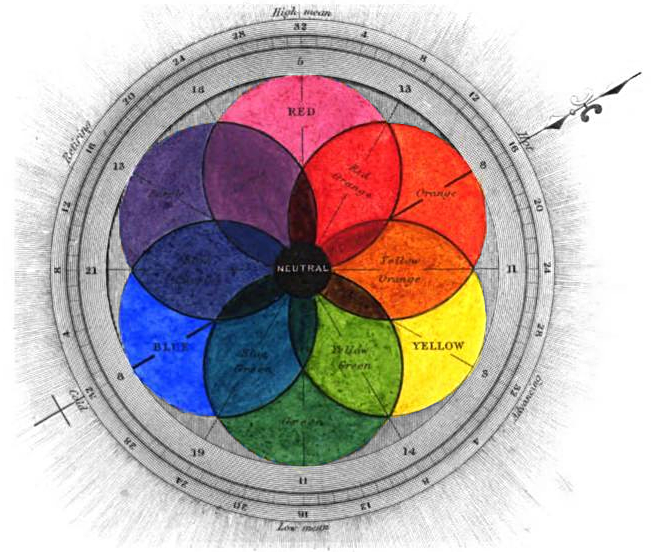
Old-Color-Wheel.png


An RYB color chart from George Field's 1841 Chromatography; or, A treatise on colours and pigments: and of their powers in painting

Back in the 18th century the theories surrounding color theory were cemented in the idea that the RYB (Red/Yellow/Blue) was the way to go. These theories have since changed over the years, however the RYB color model is still often used in teaching painting, and color theory up to this day.

These theories were enhanced by 18th-century investigations of a variety of purely psychological color effects, in particular the contrast between "complementary" or opposing hues that are produced by color afterimages and in the contrasting shadows in colored light.

During the 18th century the theory of the RYB model was furthered by two great thinkers. They were Johann Wolfgang von Goethe, and Michel Eugene Chevreul. They were both transfixed by what is called the Psychological effects of color, and obsessed with how our eyes perceive color. One of the main things they observed was how complementary colors (that means they are opposite each other on the color wheel) created afterimages in our brains when they were "burned" into our eyes. They were also interested in why shadows in colored light would create contrasting shadows. You can download Goethe's The Theory of Colors here as I've uploaded it to this site. It is in the creative commons so there it has no copyright and is in the Public Domain.

After Goethe and his treatise on color, scientists moved away from the RYB color wheel and shifted towards a color wheel which most everyone sees every day. This is the Red, Green, and Blue (RGB) model which still dominates a lot of media to this day (Hint: It's how your TV works). To understand how this color wheel operates we need to go back to the previous lesson, and further examine how different lights makes different colors as opposed to how pigments (or physical mixtures of color) differ.

In the previous lessons we have talked about Additive and Subtractive colors. Forgive me if I wasn't clear enough before, but these lessons are meant to be sequential, and therefore sometimes I will withhold information so you can absorb it at different rates.

To put it simply, Additive Color is created by adding color. How do we add color? Well, by using light. That's why if you get up close to a TV set you will see tiny little bars of Red, Green, and Blue. Learning about additive color is particularly important for those who use a computer to create their imagery, as they are dealing with a medium that is essentially based upon the glow of a computer screen. Now, what happens when that person decides he wants to print out the image on his screen? The answer is that he will need to deal with another color wheel when the image is printed from a computer screen onto a piece of paper! This is because a piece of paper doesn't glow, it's reflecting light from a light bulb or the sun. As we discussed previously, an object doesn't hold a certain color because it reflects it, it is a certain color because it absorbs all the other colors in the spectrum. Hence the term, subtractive color.

painters-color-wheel.png

So we, as painters, aren't painting with light, we're painting with paint. Hence, we need to use a color wheel which is specific to our needs. Let's take a look at the two different types of color wheels. Check out the first one below. This is a classical color wheel which utilizes Red, Yellow, and Blue as the primaries.

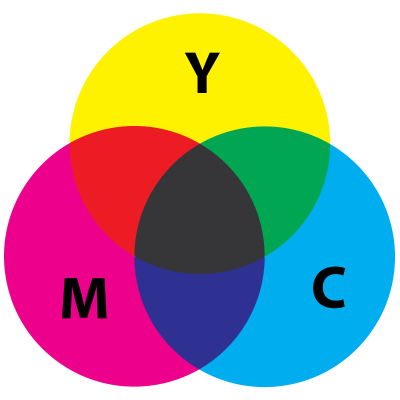
Subtractive-Color.png

There's some nice oranges and violets in there right? Oh? What's that, you want them to be brighter and more vibrant? Well, then you can use the Cyan, Magenta, and Yellow color wheel below. CMYK is the color wheel which is utilized in printing, and has generally been regarded as the "true" set of primaries.


But there's a few problems with this color wheel. Mainly, it doesn't exist in nature (as in, natural pigments) as readily available as the colors which have been used for thousands of years. However if you want to oil paint with Cyan, Magenta, and Yellow then you can. But if you believe that oil paints will mix similarly to a printing machine then you're fooling yourself. As you have probably already learned, different colors and different pigments have different strengths and weaknesses.

By this I mean every color has different properties. In the printing process CMYK(K stands for black) are often used in transparent glazes. For instance, in order to make red in in CMYK printing you first print a tiny little magenta dot, and then on top of that dot is a yellow which is semi transparent. That's how you make red. Now with oil paint let's say that you want to paint a giant red object. If you were painting by utilizing the CMYK printing model you'd have to first paint an entire layer magenta, wait three days, and then on top of that you would glaze a bit of yellow on top of it to get your red. So yes, it is possible to paint with CMYK, but the simple answer is that it would simply take FOREVER to finish a painting, because we're not machines, and paint takes a long time to dry.

So what do we do as painters? Which color wheel should we use? I would suggest that you (that's right, you) find a palette that you enjoy working with. Limit it to no more than 10 colors, and get used to it. It takes a long time to learn how to properly mix and see color so find a palette that you feel comfortable manipulating. I know for me I like to use Cadmium Red Medium, Cadmium Yellow Medium, Pthalo Blue, Pthalo Green, Alizarin Crimson, Yellow Ochre, Ultramarine Blue, Raw Umber, Permanent Violet Medium, and Titanium White. And that's what I've used for numerous painting tutorials that I've done. It's a hybrid of both CMYK as well as the Old RYB models. With RYB it can be difficult to make a nice brilliant violet as well as green. So what do you do? You buy them :) And if you want to try to paint with Cyan, Magenta, and Yellow then you can. These colors are generally referred to as Process Blue, Process Red, and Process Yellow. They're dyes so they won't last as long (meaning they'll fade faster) as the classical pigments but they could be interesting to experiment with. For me? I'll stick to Cadmiums, Ultramarine, Titanium, and Cobalt. There's a reason why they've been around for thousands of years.