Lesson 15: Assessing your progress

You’ve now come to the end of a long journey, but it’s one that is just beginning. At this point I

would like for your to go back to the drawings you made in Lesson 3 “Creating your baseline”

and redraw them again. I am confident that if you have dedicated time and passion in this

course you will see an improvement that you didn’t even expect. This is the first installment

of three books which I have planned about painting. In the next we get away from the theory

and will begin to go further into edges, paint application, glazing, and other technical aspects

concerning paint. Please stay tuned at painting-course.com to see all the newest and latest

assignments and updates on the new “semester” coming. As I said previously what you have

just finished represents about 1 year of foundation level in college in painting. I intend to

continue on making this opencourse work free online as I believe there are too many books

which teach only technique, and no theory. So now that you’ve got a good grasp on theory it’s

time to start having fun, and getting messy with paint!

Final Assignment: Coming Full Circle

Redo your previous Baseline drawings and compare and look at areas you need to improve,

and other areas which you feel to sharpen up your skills. But don’t be too hard on yourself! Look

at all the progress you’ve made and realize that the more you practice at this point, the better

you will be. You’ve started the journey! Great work!

We've come a long way in this course so far. We've gone from drawing our hands and learning about basic forms to learning about color theory and finally making our first painting of the four major forms with black and white acrylic paint. . When I say "Learning to paint" this isn't something that can just be learned with one quick lesson. There aren't really any tricks or shortcuts. If you want to learn to paint you must dedicate yourself to it, and treat it as a discipline. You will improve with each painting you make. What I've outlined in the previous lessons is a foundation which will translate towards painterly thinking.

Upon completing the previous lessons you should now posses a skill set. Think of it as a certain set of skills which you are trying to master. There are analogies that could be made to a variety of other activities which need discipline in order to excel at. I compare painting to music a lot: but in this case I believe the philosophy you should develop towards learning to paint should be closer akin to a student of martial arts. It's a body and mind duality. Both your dexterity needs to be improved in order to manipulate the brush in a deft manner, but also your mind needs to learn how to stay out of the way and stop naming the things you are drawing or painting. If you really want to learn to paint you can't just read about it, you need to do it, make mistakes, and then do it over, and over, and over again.

Perhaps you understood how to mix color harmonies very quickly, but are still worried about your drawing skills. These are important factors to consider and if you are truly dedicated to learning to paint then you should begin to address the skills at which you feel the weakest. Below in the Report Card you'll see a list of skills I've tried to teach so far. After each skill I want you to grade yourself on how you are performing at this point. Be honest, no one else will see them. Your weak areas simply need more attention. The problems can be addressed by redoing lessons you don't feel confident in.
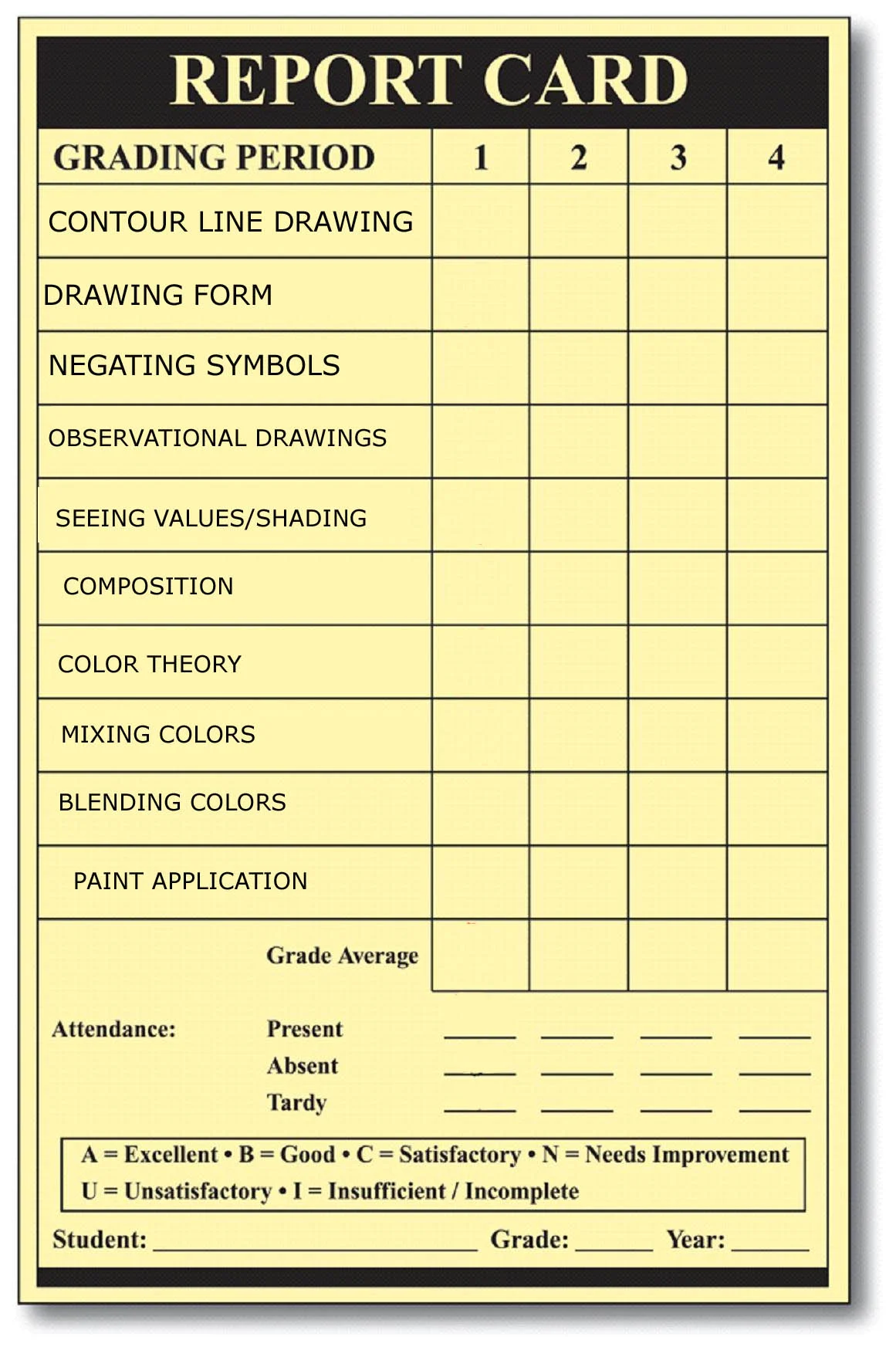
self-evaluation-painting-course.jpg


If you want you can print it out and hang it up on your wall to remind yourself what things you want to improve. You should always remember that you are learning a new skill for yourself, and that nothing should stop you from persuing your dreams. If Learning to Paint is a life long dream then it can't hurt to jump in and try! Personally I feel it is best to show your friends and the world your work immediately (I even have a lesson dedicated to creating a personal blog of your art work), but if this isn't your style, then so be it. Don't show anyone your paintings until you are ready to do so, just don't discount your abilities.

I know this is beginning to sound like some sort of motivational speech. But I include self evaluation as an actual Lesson because it is important to be able to self evaluate if you want to continue to learn how to paint better throughout the years. Learning to paint isn't about one lesson showing you how to "shade" , it's the culmination of many lessons and years of work. The next lesson in this course will involve your first real painting where you'll have your first opportunity to bring everything that we've worked on so far into one painting. This is the reason why I want you to take inventory of your current skills before we proceed. We're still working on basic ideas and techniques but as we begin to combine them things start to get more complicated pretty fast.


Lesson 16: Painting Landscapes

How To Paint Landscapes

france-landscape-photo.jpg


During this lesson you will be learning how to construct and paint a landscape painting. I've chosen to begin with painting landscapes because they allow us to utilize all the different skills we've been working on so far. Instead of using "Plein Air" techniques which are very popular today among painters wishing to capture "light" I will be teaching about the structure of the landscape and letting you know about how it works. There are a lot of varying principles which should be taken into consideration. This may seem like a lot to consider but I'm more interested in giving my students a chance to make great work as opposed to praising mediocre work. Let's first look at the steps involved and the things we are to consider when composing,drawing, and painting our landscape painting.

Finding a photograph to work from, or learning how to photograph landscapes yourself.

The first step is to find (or take) a photograph from which to work. If you want to find an image from the internet to work from then that is fine. You may want to jump to google images and use the first "cool" image you find. This is not the way to go about choosing a photograph. I would suggest looking for images in the creative commons. You can use this search engine to search the creative commons for images that you can use to create paintings from. When searching for a photo to paint from it is important to start seeing a few different elements. Take a look at the image below that I found in the creative commons from user Isamiga76 . It's a photograph of a french landscape.


It's very important to have an image that has high contrast and a clear definition between the foreground, middle ground, background, and sky. In the following photos below I've separated these different elements so you can see very clearly what I am talking about. If you are choosing to take your own landscape photos then having a definitive foreground, middle ground, and background should be one of your first considerations when taking a photo which will turn into a painting. This gives the image a sense of depth and creates clear markers for our brains to understand how the elements recede towards the horizon line.

Foreground Landscape


The foreground will contain the brighest colors present in the entire painting. This is because colors lose intensity as they get farther away. This is a scientific fact based upon the amount of water vapor present in the air. You can imagine that as you look farther into the distance you're actually looking through more and more water vapor. This clouds everything and gives it a cooler greyish blue glaze. I've also taken out the cows, and have chosen to ignore the barbed wire in the foreground.

Middle ground Landscape


The Middle Ground will generally contain the darkest values present in the painting.

The Background


The background of the landscape will be lighter than the middle ground due to atmospheric perspective (stuff farther away gets a cloudy blue glaze).

Clouds


Clouds are an important element of any landscape and in this photo they seem a bit bland really. If you want to paint these types of clouds you can review Lesson 15 How to Paint with Acrylics . It is here where I first spoke about hard edges vs. soft edges and when painting clouds we are essentially looking at a large mass of hard and soft edges intermingling. This is the most important consideration to take into account when painting clouds. In the photo above we can see that the clouds closest to the horizon are also the most blurry (soft edges) while the clouds closer to us at the top of the photo have a bit more contrast and harder edges.

For this painting we don't want to have some weak clouds so let's try and energize this landscape a bit. I'm going to be adding some different clouds using a free image editing program called gimp. This is a habit you should also get into. If you find a photo, don't just copy it, try and mix it up a bit to make it yours. Gimp is completely free opensource software and it works great for doing some simple editing to photos. There are also loads of tutorials all over the internet on how to use all of its different features. The good thing about painting is that you don't really have to worry about making a perfect photoshopped version of what you want to paint. It can have clunky collaging and look ridiculous, but you can always clean up any of those edges in the final painting. As you can see in the photo below. The new clouds seem to make the entire image look brighter. You wouldn't guess it but this image is quite dark overall. In the black and white version you can see the values of the colors and just how color intensity can trick you into thinking a bright color is light, in this case the bright green in the foreground is actually quite dark.


Black and white


Now that we can see the values of our colors we start to have an idea of the sort of color harmonies that are at play. One of the most memorable phrases I heard during art school was that your palette should look like an abstract version of your painting. To further visualize this I have created a value scale of the colors present in the image above. This will serve as a visual reminder as to what colors and values I need to be mixing during the painting process. If you are able to I highly recommend that you create a similar color value scale before you begin painting on your landscape.


Notice the cool and warm colors and the harmonies they create. For your white I would suggest that you never use pure white in a painting as it tends to stand out in an unrealistic manner. Your whitest white should be the light cream color which will only be used for small highlights and parts of the clouds.

Step One

The first step is to make a quick, yet accurate sketch of the landscape. You are mainly looking for the main lines that separate the foregound, middle ground, and background.


Step 2

Next you will paint in the major values with a broad brush. Your goals is to have at least 4 varying tones, but not too many. This is not the point to be concerned with details. You are only looking for large value shapes and painting them with their corresponding values.


Step 3 Blocking in Color


Using a large brush block in the major colors in your landscape. You are going to try and create colors which are the same value as the grey you had previously painted. The reasons for painting the black and white underpainting are now evident during this phase as acrylic paint tends to be somewhat translucent. Your colors in your painting won't look streaky and white but instead solid and bold. You can also notice how large some of those dark shapes are. This is because we can trim these value shapes down during the next step. At this point you want your painting to be a very quick impressionistic light study.

Step 4 - Details and Cleaning


This is the step where you get to cut away at your large value shapes with a smaller brush. It's very easy for this step to continue on indefinitely as many beginning painters want to keep refining small details. The result of this can often be a painting that lacks freshness. Remember this isn't meant to be a finished painting. These are still studies. They should be treated more as assignments, and less as finished pieces. I would suggest using these same steps to paint other landscapes as well. Practice makes perfect and this step by step process will provide the structure, and framework needed to paint countless landscapes.

http://search.creativecommons.org/

Lesson 17: Color matching values

In this painting tutorial I go through how to set up a very basic palette, and how to use a palette knife to create value scales with various colors. By setting up these simple piles of color before you start a painting you can be assured that all of your colors stay within the desired range of values.

Color Matching Values

Matching colors to values (the darkness or lightness of a color) is the most important skill to learn when learning to oil paint. For further information on the topic of color values I would suggest checking out the lesson on Color Theory Basics.

In the painting tutorial video above I go into how to mix different values of color on a palette. I have chosen to use a painting knife however the same colors could be mixed using a brush. The palette is glass which has been spray painted grey on the back. I have chosen to paint it grey because this is a very neutral color, and I don't want the color of the palette to interfere with how I see the colors I'm trying to mix. It is important to remember that colors will interact with each other. For instance a white square painted on a yellow background will appear to be darker, since the surrounding color is also light. However, a white square painted on a blue background will appear to be brighter since the background is darker.

color-matching-1024x512.jpg

Once you've got a palette with a neutral background you can begin to start making different value scales in different colors. You should already know about value scales as we have covered them extensively in the drawing section of this website. To make a value scale you must first have a guide to go from. So I would suggest making your first value scale in black, white, and greys. Then you can compare the darkness or lightness of your subsequent mixes of color against a black and white scale (this can be achieved by squinting).

If you came here thinking about trying to find what colors match (ie. which colors go together) I'm sorry to tell you that this isn't something which can be summed up in a succinct manner. There are many factors which determine what colors will traditionally "match". If you peruse my section here on Color Theory you can begin to examine all of the reasons why there isn't any general consensus of what colors actually match, and which ones clash.

For this assignment you will have to create your own value scales in 6 colors and Black and White. Red, Yellow, Blue, Orange, Green, Violet. So there's a total of 7 value scales which you will be creating. Once your palette is full of these colors you will then take a picture of it and post it to your student blogs.

Lesson 18: Local Color

Local Color

Painters often refer to something known as Local Color. So what is it exactly? Well, there is a very simple explanation. Local Color refers to the color of an object if it is unhindered by shadows and highlights. Still don't get it? Basically it is what the actual color of an object is. Take for instance a Tomato, now most people would agree that tomatoes are red, however that's just part of the story and the way that our eye perceives colors. In reality if we really examine a tomato we will see all sorts of different tones and highlights. Take a look at the image below and you will notice the myriad of colors which are created just by one tomato. There's pinks, violets, browns, and reds. Simply put, when painting any object we must consider all the colors and many times it isn't intuitive to see the light violet colors because of our preconceived ideas about the local color of the object, which is red.

local-color.jpg


When it comes to painting it is very important to be aware of what the local color of the object is, however it is also vital that we delve further into the more nuanced colors that appear as well. This is even more important when we have multiple objects of different colors placed closely together. The light bouncing off of one surface can create a reflection and influence the surrounding areas. Therefore, if we look at the top of the tomato we can begin to see that the green vine above it is effecting the colors of the shadows as well. For this reason it is very common for painting instructors to say that students need to start examining what colors make up the shadows in the objects they paint. There's a whole rainbow of color hiding in the shadows. This was most evident in the Impressionists' works as they would commonly use blues, and even reds in their shadows.

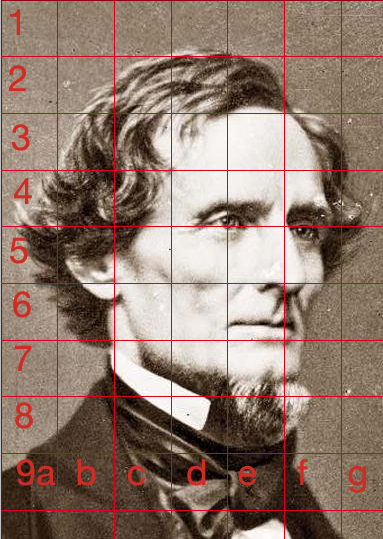
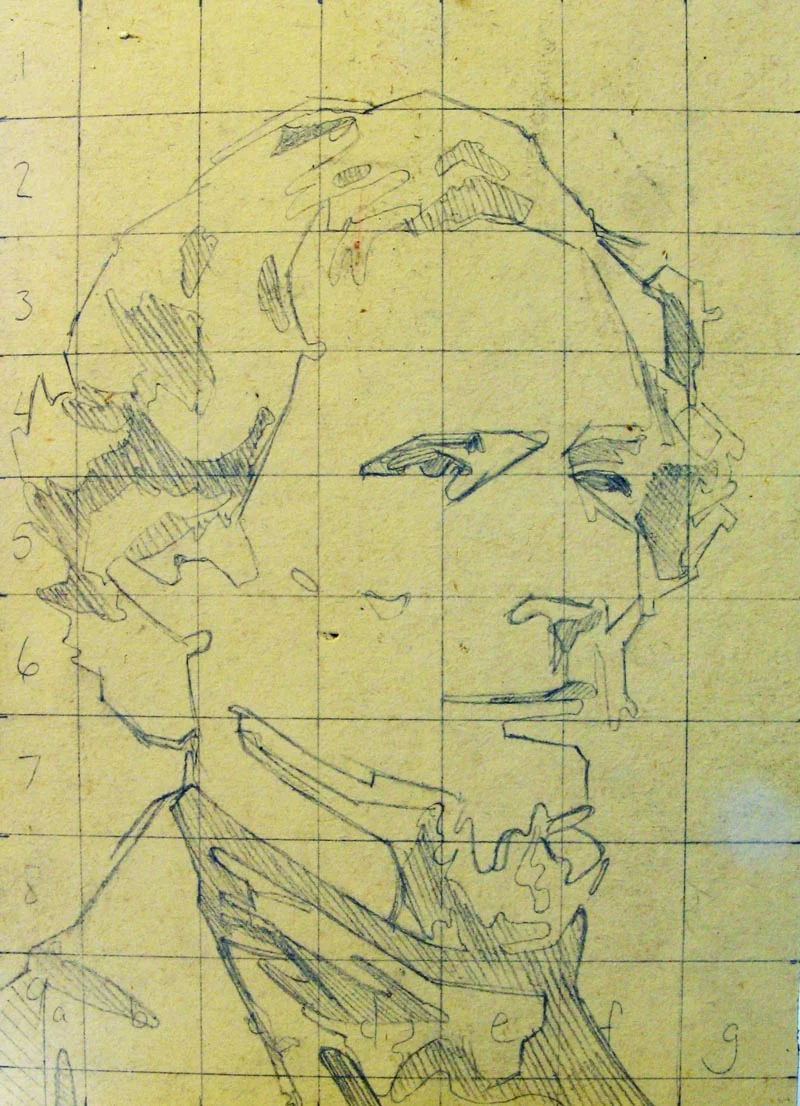
It is the goal of this lesson to get beyond local color and we are going to make sure that there's no chance it will seep into this exercise. You will be painting a portrait without the use of local color. It is up to you to use your skills in seeing the value (darkness) of a color and by doing so you can still create a believable space which is totally divorced from your preconceived notions about what the local color of the object is. For the first part of the assignment you will copy the painting below and this will give you a feel for how Color as Value works. I've included the drawing, as well as the original image (gridded out), and a picture of my palette so you can get a clear look at what these colors look like. Once you are finished with the first painting you will find an image of your choosing and will have to complete a second painting. In your second painting you will once again be looking beyond local color. Really push how intense you can make your colors, and you'll also start to notice that the temperature (basically how warm or cool a color looks) also influences the way we perceive reality.

1. Source Image from which the painting will be made. Feel free to change the unit of measurement if you wish. One box could easily equal an inch or whatever fits the size of the canvas you are working on.

portrait-grid.png


portrait-drawing-2.jpg

2. After gridding out your painting surface you will sketch in the big value shapes present in the photo.

portrait-2.jpg

3. You will then paint in the value shapes using the value of the color to create an illusion of depth. Disregard what you know about color intensity and local color. Be bold.

palette.jpg

4. Remember that your palette should be a representation of all the colors you will use.

portrait-black-white.jpg

5. If possible take a photo of your painting and change it to black and white. This will be an indicator of how good your eye is. The painting should stand up as a black and white image as well as a color one. This is an extremely important aspect of painting. Seeing color as value.


Upon finishing this copy you will be creating another painting on your own in the same manner. Remember to choose an image that has a wide range of values from light to dark.

Lesson 19: Your first resolved painting from start to finish!


Oil Painting Step by Step

In this painting tutorial I go through a common step by step procedure on how to paint with oils. From the drawing, to the underpainting, glazing, and final details.

Step 1: Find your source imagery and prepare it for painting. This could include photoshopping various elements in photoshop, collaging images from magazines, taking your own photos to paint from, etc.Then create a grid on your source imagery. This can be done in photoshop, or you can print the photo out and grid it out with a ruler and pen.

Step 2: Create a grid on your canvas which matches the size of your prepared imagery (ratios are ok, so for instance an image which is 5 x 10 could be scaled to a canvas which is 20 x 40 etc.) Mark each line on the grid with a series of numbers and letters so it is easy to find which square you are looking at and how it relates to the image you are painting from.

Step 3: Draw your imagery onto the canvas using a pencil using your grid lines as a guide to help you. If you are wondering why we use a grid, the answer is that it is much easier to manage smaller squares as opposed to larger ones. It also forces you to abide by the predetermined composition you initially created, so basically, it helps you make sure you can fit everything you want to on the canvas.

Step 4: Find large value shapes. Value refers to the lightness or darkness of a color. For this step it is helpful to have a black and white version of the source material from which you are painting. If you have photoshop just take out all of the saturation of the color, if you don't, then make a black and white photocopy of the image.

Step 5: Paint the large value shapes with the values they correspond to in black and white.(You can use Acrylic paint for this as it dries faster).

Step 6: Once you've completed your value study of the painting you are ready for color. Mix the colors you wish to apply to the canvas on your palette (Never mix on your canvas). You can use either opaque colors which will totally cover the value study, or you can use transparent colors and use the value study to help make your shadows.

Step 7: Paint in the colors you wish to use, and use the value study to see how closely the value of the color relates to the value of the value study. If this is hard for you to see, then just squint you eyes until the color turns into a black or white shade.

Step 8: Make final adjustments and put in details.


Lesson 20: Gestalt principles of art and design

Gestalt Principles of Art and Design

These theories of painting come from a German form of psychology called Gestalt which simply states that the whole is greater than the sum of its parts. It is often used in both art as well as design to achieve the desired effect. The main points of Gestalt are summarized below the image.

1. Figure/Ground

This is the idea that speaks to the human mind's tendency to separate figures from their backgrounds. These differences can be furthered by utilizing a number of different techniques which can include contrast, color, intensity, and size.

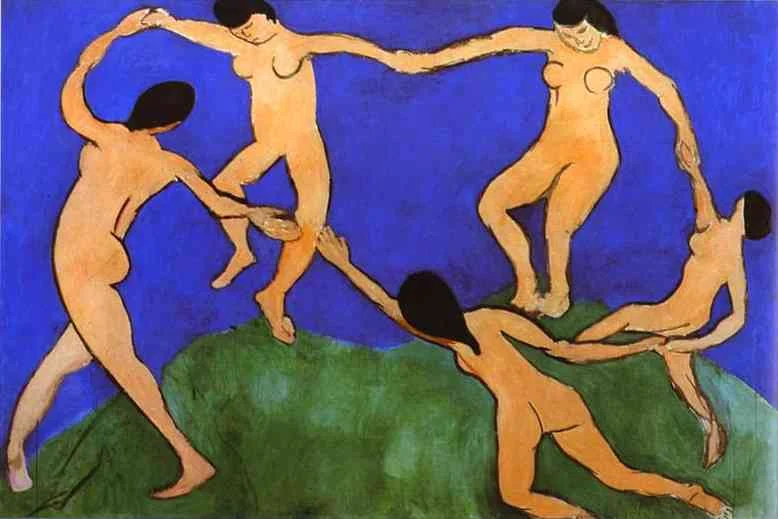
In the Matisse painting below we can see a clear differentiation between figure and ground. It is also helpful to think of the ground as the negative space around the figures present. Also notice how Matisse utilized contrast, as well as color to make the figures come to the front of the painting, and push the background back in space. In general it is a good rule of thumb to think that warm colors will come forward in space while cool colors recede.

matisse.jpg


In contrast to how Matisse used Gestalt principles to make his figures stand out in space we can look at the French artist Vuillard who played around with blending the background and the figures present in the image below. Notice how the woman who is closest to us seems to almost dissapear into the background while the man at the door has a sharp contrast against the pattern. Vuillard was playing with the principles of Gestalt here to highlight how our eyes generally view paintings. By making the man at the door seem to pop to the front this creates a tension in the painting that some find desirable.

vuillard.jpg


2. Similarity

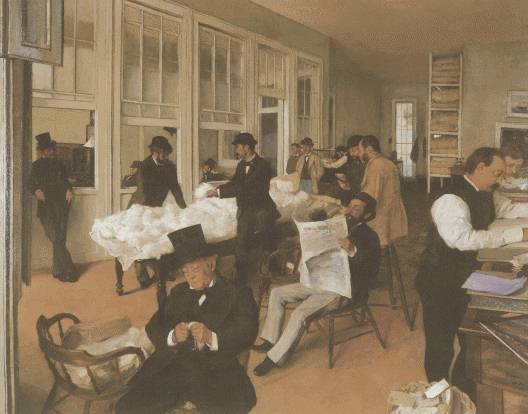
This is the Gestalt theory that states that the viewer tends to group together objects which share the same characteristics such as shape, size, color, texture, and value. In the Degas painting below we can see how he employed many different circle shapes (in the form of the hats) in order to create a sense of unity throughout the painting. The hats also have similar textures which help us group them together. Notice how powerful color intensity is and how the hats which are brighter are easily grouped together while the other hats which are darker are a different group altogether.

degas.jpg


The principle of similarity can be more easily understood in the following graphic below. Notice how even though all of the shapes are the same color that by changing the shape of the objects we also change how our minds group them together.

similarity-design.gif


3. Proximity

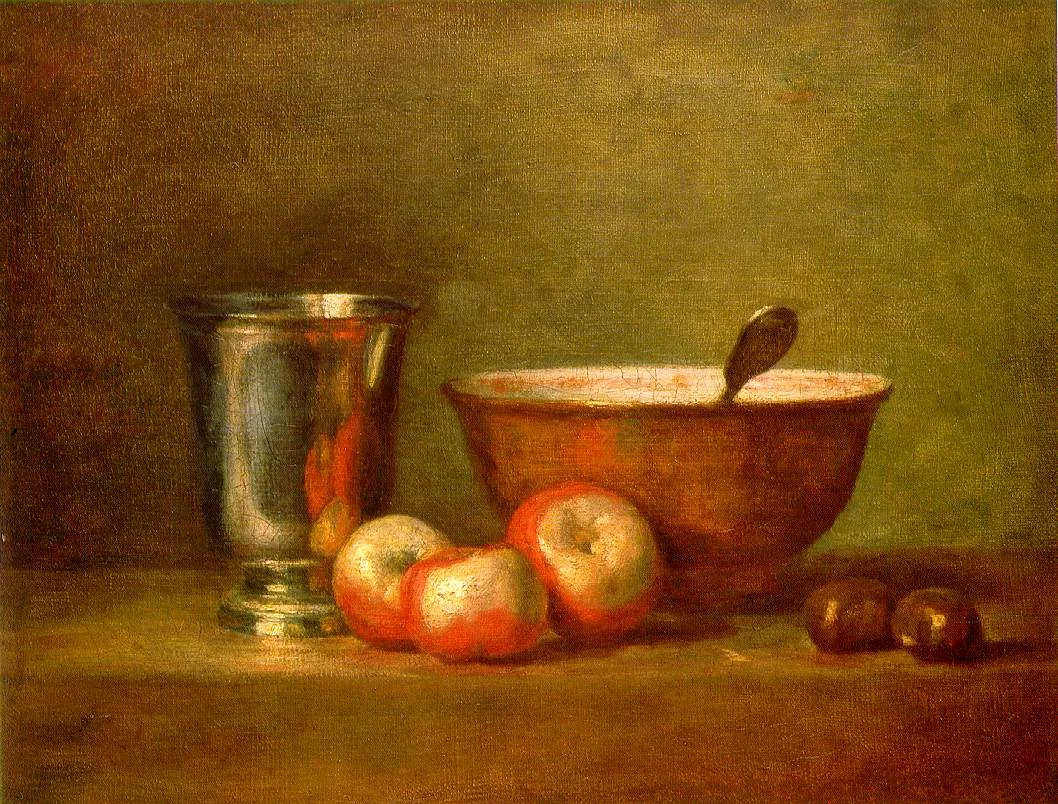
Think of proximity as how close certain elements are in a composition. Proximity can also be referred to as grouping which is similar to similarity. However, there is a difference between similarity and proximity as we can see that the objects don't need to all be the same size in order to be grouped by the brain. In the Chardin painting below we can see how the apples are grouped together even though they are different sizes. Grouping can be achieved by shape, color, tone, and space.

chardin.jpg


In the painting below by Degas we can see how parts of a composition can be grouped together by their value. Even though there are figures both in the foreground as well as the background we can see how we group together the darker elements as abstract shapes. In the case of Degas' painting of The Office this is present in the dark shapes which make up the suit jackets of the subjects present .

degas.office.jpg
closure.gif

4. Closure

As we discussed earlier closure is the idea that the brain will fill in any extraneous information which is not present in the image. This is a common tactic employed by both painters as well as designers.In the image below we can see how a square is created by the negative space.

Carthage-tiepolo.jpg

5. Continuity

Continuity is the idea that the eye will continue to look in a direction in which it is pushed by the forms and shapes present. In the painting below by Tiepolo we can see how our eyes are first drawn to the main subject present which is the man riding a horse holding a large weapon. The weapon is pointing down at a figure which lie dead on the ground. By utilizing the Gestalt principle of continuity Tiepolo pushes the eyes of the viewer to move around the canvas.

RaphaelSchoolofAthens1.jpg

6. Symmetry and Order

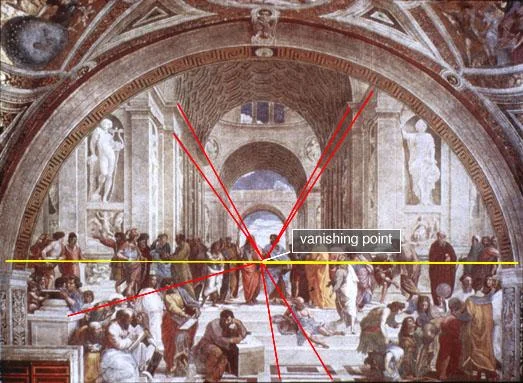
Symmetry and Order refers to the idea of how balance, and symmetry give the composition an overall feeling of solidity and structure. In Raphael's painting below we can see how by having a clear sense of symmetry adds to the structure of the entire composition. Notice how the figures aren't perfectly symmetrical on both sides of the work, however they are still balanced and neither side seems too "heavy".The larger idea at play here is that viewers want to "read" a painting in a systematic and organized manner. Some viewers who find a painting which is too difficult to read may spend less time trying to comprehend it. While clearly balanced compositions will be more accesible. This is not to say that every composition needs to be perfectly balanced and symmetrical, there are many examples of artists who play with the idea of symmetry and balance and still are quite sucessful. Remember that these principles are not set in stone, and it is ok to break them. The point being that the better you understand these principles the more sucessful you can be at breaking them.


Art History: Painting flowers

Being interested in painting means that you can’t just be interested in technique, you have to know where you fit into the world, or if you don’t know where you fit into the world then you should know about who came before you. Now, you may be thinking that you don’t have some sort of lofty ambition to become the next greatest artist, you just want to paint some flowers, and that’s ok, however even the decision to paint flowers on a table has a long, and vibrant history. And to deny yourself the history of flower painting also denies you of one of the greatest resources that you have. I’ll get more into this concept later.

Often times people are scared, offended, or angry with contemporary art. This stems from a feeling that the artist is trying to be smarter than the viewer. A sort of dictatorial power where viewers must look at the creations that artists make. This is generally made into a straw man argument, complete with references to some obscure performance art piece which seems highly inaccessible. Since we are focused on painting lets take a look at some paintings which are considered to be “hot” right now, and fetch extremely high price tags.

The work of Lucien Smith takes from artists who died nearly half a century previous. Obviously there is a connection to Jackson Pollock, because of the dripping. But if we really look at pollock’s dense canvases we can see that they are much more vibrant and full of life than Smith’s work. As we delve further into Smith’s work we see that these abstract paintings are just one of many different ways that he paints, and that he changes styles frequently from painting to painting. He isn’t bound by one particular genre and isn’t confined to one particular description.

Now, you may be thinking “I don’t like it” and that’s ok, I don’t particularly like his works either, but whether you like something or not is irrelevant. It still exists, and it still can be used as an example of where the contemporary is at the moment. With this in mind, it is nearly impossible to say if a work of art is “good”, or not. With that in mind, you may be surprised to know that Lucien’s works are not well received everywhere in the art world, one of the most influential critics living today “Jerry Saltz” said that work similar to his was “crapstraction” a play on the word abstraction, and that “This is not painting but semantic painterbation”. So as you can see, the art world isn’t some giant monolith that everyone makes it out to be. There is a wide variety of viewpoints and no clear consensus as to what art should or shouldn’t be.

Many times an agument is put forward by someone without a lot of historical knowledge that there are rich buyers, and snobby critics who just randomly choose some MFA student to make famous and then they all agree, and everyone makes money. One of the world’s most famous painters living today is Eric Fischl, who was known for his perverse paintings of American suburbia has devoted a whole slew of his new paintings to the theme of art fairs, where this stereotype certainly rings true in his paintings. And his paintings are not being shunned by the art world, instead the opposite is true. This is because most have an ability to be self critical, a skill which is mandatory if you want to become an artist.

So whats this have to do with the flower paintings. In the 1600s in the Netherlands what we now think of as still life paintings really flourished. These painters depicted everyday scenes with amazing detail and were true masters of oil paint as a medium. Artists such as Roelandt Savery and Jacob Vosmaer made a great living off of their works and lived very opulent lifestyles. The idea that historically speaking, you have to be dead to make a lot of money from your artwork simply isn’t true. As we dig deeper into one work we can see that in this painting, titled ( I could you not) Still Life there are over 40 different flowers from many different countries. To be able to paint from all these different flowers in real life meant that you had to have access to money, and it was no mistake that Roelant became the court painting for King Rudolph in Prague. Yeah, kings actually used to have painters because their works were seen as status symbols. So what else does this painting of flowers tell us about Prague in the 1600s? It tells us that Rudolph had access to flowers, which means established trade routes. It also tells us that his kingdom, (or certainly himself) wasn’t do too poorly as he could afford to spend money on things like paintings, and importing flowers from all over Europe. And as we look more into Rudolph as a character, we start to learn more about Roelant as a painter. Rudolph was a really strange emperor, interested in magic, alchemy, and astronomy. He loved collecting things, beautiful things. Could this be why Roelant moved from The Netherlands to Prague to paint flowers? Well, yes, yes it was.

Wait….Do you see what just happened? We just went from flower painting, to European empires, alchemy, and issues of wealth and class by looking at a painting. See why art and paintings are important cultural relics? And some would argue that flower paintings aren’t relevant today because they don’t address contemporary issues. Is that true? Should nobody ever paint flowers again because somebody else did it better? Well of course not, and there’s a way to ensure that doesn’t happen.

You see, first of all you need to discover what types of flower paintings you’re attracted to, and why. By default, you will most likely go to technique first, this is understandable because you still need to build a skill set. Perhaps you’re more interested in how flowers are depicted in Persian cultures. Perhaps you admire the precision of photo realists, but again, this is just technique. As one of my favorite paintings instructors Steven Sheehan said “If you’re painting a landscape put a car in it, because then at least people will know when it was painted” . So if you’re making a painting of a flower on a table – how are you doing it. What is your process? Are you starting with a photo you got off the internet of some flowers, how does this effect the final image? Are you going to your local grocery store to buy some flowers? Do you leave them in the plastic bag with the supermarket’s logo on it or do you take them out and put them in a vase? If so, what kind of vase? A hundred year old vase that your grandmother had, or a McDonald’s cup. How are you lighting them? Will you be using classical form lighting? Will the painting be done in chiaroscuro, with high contrast such as in carvaggios works, or will they be bland pastel colors like Morandi?

All great works of art can generally be defined by a certain set of criteria.

What materials and techniques are the artist using?
By identifying the materials and techniques that another artist used you can develop a work schedule which allows you to get better at your abilities. This is the nuts and bolts of the work, not the core.

What other artists are known for using this technique?

Do some research, and look into what other artists are good at the techniques you want to get better at. Make a list of them, make a blog about all of them, copy their works, and soak in their paintings. Study them, and understand what it is about their work that you consider to be strong.

What is the historical context of the work?

This one tends to freak out students quite a bit, and it’s understandable as to why. The history of painting is big and imposing enough, not to mention all of art history, and then all of humankind, and then all of the history of time and space and ahhhhhhhhhhhhhh!

Stop. You’re freaking out again. As we discussed before painting doesn’t have to be about some lofty philosophical ambition, it can just be about flowers on a table. However, you must be aware of the decisions you’re making when you place that vase, and those flowers from your front yard in North Dakota, on a new table from ikea, light by a halogen bulb pointed at the ceiling. You can’t escape it. A time and place is infused into every great work of art. Don’t diminish your story in exchange for a cheap technique which can be copied. You’re more interesting than that.

Lesson 21: Color Harmonies


Introduction to Color Theory

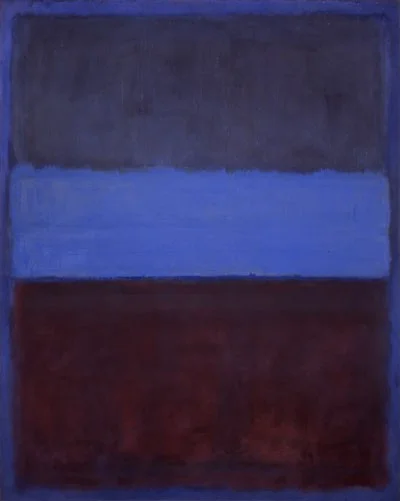
Before we get into exactly what color theory is, and how it works, we need to first look at a broader concern as it pertains to how people experience works of art. This is the correct place to begin an Introduction to Color Theory as we will have plenty of time to delve into all of the principles and physical properties of color later. So, what exactly happens when we look at a piece of art and experience it with our senses? This experience can be called an Aesthetic Experience. Aesthetics (also spelled æsthetics or esthetics) is a branch of philosophy dealing with the nature of beauty, art, and taste, and with the creation and appreciation of beauty. It is more scientifically defined as the study of sensory or sensori-emotional values, sometimes called judgments of sentiment and taste. More broadly, scholars in the field define aesthetics as "critical reflection on art, culture and nature."

rothko_blue.jpg

So what does this mean exactly as it relates to an Aesthetic Experience, and what does this have to do with painting? Well, believe it or not, you most likely encounter and experience many Aesthetic Experiences every day. These could range from looking at a flower and admiring its beauty, to sitting on the couch and watching a commercial. Both of these actions are sensory ones. Since you are a passive observer who is experiencing the world through sensation, and perception. As with any Philosophy there has been much disagreement throughout the years as to what exactly is happening in our brains when we have an Aesthetic Experience.

Kant said that aesthetic experience of beauty is a judgment of a subjective but similar human truth, since all people should agree that “this rose is beautiful” if it in fact is.

Shopenhauer believed that aesthetic contemplation of beauty is the most free that the pure intellect can be from the dictates of will; here we contemplate perfection of form without any kind of worldly agenda, and thus any intrusion of utility or politics would ruin the point of the beauty. It is thus for Schopenhauer one way to fight the suffering.

Oscar Wilde stated that the contemplation of beauty for beauty's sake was not only the foundation for much of his literary career but was quoted as saying "Aestheticism is a search after the signs of the beautiful. It is the science of the beautiful through which men seek the correlation of the arts. It is, to speak more exactly, the search after the secret of life."

So before we get into the nuts and bolts of what makes color theory work it is important to first understand that Aesthetics do exist, and the merits and qualities of what makes up an Aesthetic Experience have been debated for quite some time.

A common question regarding Aesthetics is whether or not they are universal, cultural, or personal. For instance someone may have a different reaction to looking at a painting of a rose who has a strong personal memory of the flower. Perhaps seeing roses reminds them of their childhood and cutting them in the garden with their grandmother. In this case it is important to note that Aesthetics aren't necessarily a rigid set of rules by which one must abide. Rather that our Aesthetic Experiences are also guided by cultural as well as personal experiences. They are more fluid rather than concrete. With this being said it is also important to understand that there are a certain set of rules which have been successful throughout the years in creating a desired response from the viewer. To put it simply, how do we as humans create works of art that elicit certain internal responses in those who view our artwork? And this is where we come to color theory.

As many students on this site have probably already noticed I make a lot of correlations to music as this is an easy comparison I've found that many people can grasp. In the case of color theory it is no different. Simply put color theory investigates what elements work in creating a desired effect, much of which is the same as music (listening to music is also an aesthetic experience as it is an experience where someone is experiencing something with their senses that is beyond words).

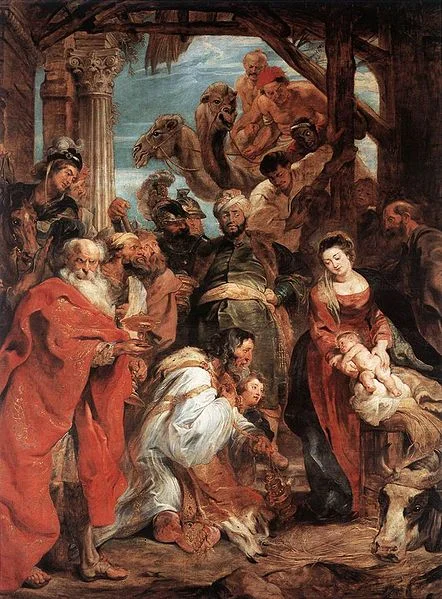
First take a listen to Mozart's Requiem while looking at Rubens' Adoration of the Magi.

The_Adoration_of_the_Magi.jpg

Notice how all the notes create harmonies that our ears latch on to? See how the tempo and intensity of the music changes throughout the piece to evoke a certain feeling inside of us? Pay attention to the lack of dissonance, and what type of emotions are stirred up while listening to this piece. Mozart's Requiem is regarded as a masterpiece not only because of how it makes us feel, but also because of how Mozart interpreted music and utilized his own creative vision to use the tools of music (which had been around hundreds of years before him) to craft something new which struck a nerve with the listener. In painting, one of our tools is color, and how we place our colors on a canvas could be compared to how Mozart arrange his notes on paper.

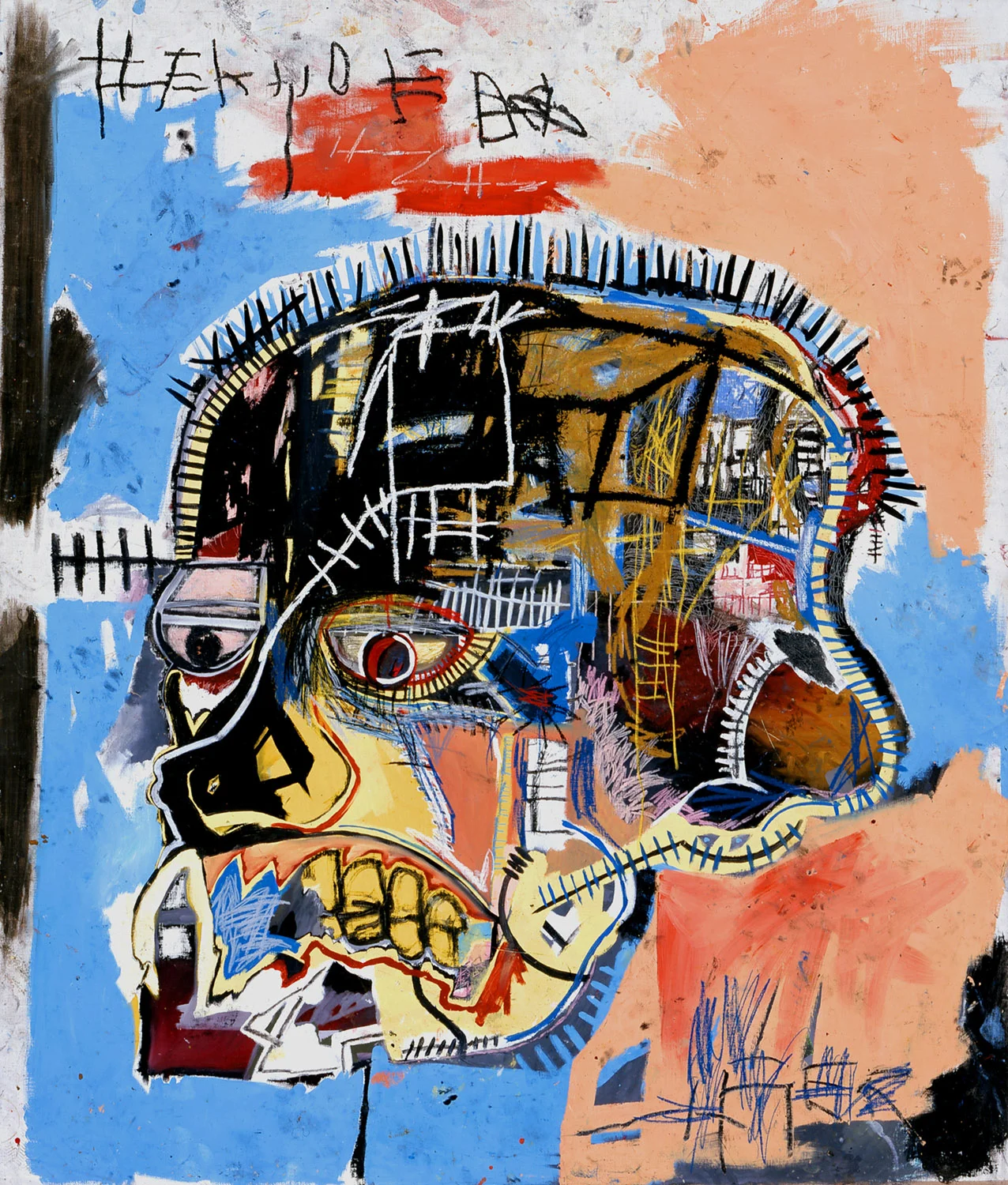
basquiat-jean-michel.jpg

Now lets listen to another composer who used these same tools of music to create a feeling of dissonance and anxiety. His name was Alfred Schnittke. Take a look at the painting by Jean Michel Basquiat below while listening to Schnittke's piece and examine what type of emotions begin to well up inside of you.

Now, Schnittke used dissonance, a feeling of chaos, and strange time signatures in his work. Does that makes the work more difficult to listen to? If so, does this make the work bad? Or is there really such a thing as bad music? And the most important question, could Schnittke have created these compositions without a firm understanding of the rules of music and how to take them apart? Sure, Schnitkke's pieces aren't for everybody, just as paintings by Jean Michel Basquiat aren't for everyone. But what we're really examining here is just how the use of the mechanics of sound and color are used in order to make us feel a certain way. As we look at the piece by Basquiat we may experience a similar feeling, but here we are experiencing things visually.

Hopefully you have gained an insight into just what Aesthetics as well as Color Theory are, and how to identify the different ways different artists can use the conventions of sight and sound to ellicit certain feelings, and sensations in those who view them. As we continue on we will be looking at just what are the mechanics of color, and how to use what painters and scientists have studied for hundreds of years and apply them to our own works. It is important to remember however when embarking on this journey that these rules alone will not make "good" paintings. They are just tools, which when combined with finding your own personal inspiration can be manipulated to be used for your own desires in how you want to depict an object with paint, and more importantly, what Aesthetic Experience you wish to invoke in someone else.

<iframe width="420" height="315" src="http://www.youtube.com/embed/AlBS0v20T7o" frameborder="0" allowfullscreen></iframe>